EdLoop PYQs · free, no ads · questions and answers here, step-by-step solutions in the EdLoop app
PYQs · free, no adsOpen on the web (app.edloop.in)Get EdLoop – free on Google Play
Chemistryp-Block Elements

p-Block Elements: JEE Main PYQs 2002–2026

Every p-Block Elements question from past JEE Main and AIEEE papers, with options and answers. Newest first.

291questions
182papers covered
4.8%of Chemistry questions, 2019–2026
2002–2026years

Guide at a glance

The p-block elements spans groups 13 through 18 under Unit 10: p-Block Elements in the Class 12 curriculum, holding rank 4 of 31 chapters with a 4.8% share of chemistry questions.

Most asked sub-topics

Group 15 (Nitrogen Family)84
Group 13 (Boron Family)58
Group 17 (Halogens)45
Group 14 (Carbon Family)43
Group 16 (Oxygen Family)35

Practise these in EdLoop

Attempt every p-Block Elements question timed, see the step-by-step solution and track what you get wrong. Free.

Start practice

MCQ, single correct

266 questions
1JEE Main 2026 · 8 Apr · Shift 2MCQOpen question page ↗

Find the correct statements related to group 15 hydrides.

A. Reducing nature increases from $\mathrm{NH_3}$ to $\mathrm{BiH_3}$

B. Tendency to donate lone pair of electrons decreases from $\mathrm{NH_3}$ to $\mathrm{BiH_3}$

C. The stability of hydrides decreases from $\mathrm{NH_3}$ to $\mathrm{BiH_3}$

D. HEH bond angle decreases from $\mathrm{NH_3}$ to $\mathrm{SbH_3}$ (E = Elements of group 15)

Choose the correct answer from the options given below :

  • A

    A and B only

  • B

    B and C only

  • C

    A, B, C and D

  • D

    A, C and D Only

2JEE Main 2026 · 6 Apr · Shift 1MCQOpen question page ↗

Given below are two statements:

Statement I: Aluminium is more electropositive than thallium as the standard electrode potential value of $\mathrm{E^\circ_{Al^{3+}/Al}}$ is negative and $\mathrm{E^\circ_{Tl^{3+}/Tl}}$ is positive.

Statement II: The sum of first three ionization enthalpies of boron is very high when compared to that of aluminium. Due to this reason boron forms covalent compounds only and aluminium forms $\mathrm{Al^{3+}}$ ion.

In the light of the above statements, choose the *correct* answer from the options given below

  • A

    Both Statement I and Statement II are true

  • B

    Both Statement I and Statement II are false

  • C

    Statement I is true but Statement II is false

  • D

    Statement I is false but Statement II is true

3JEE Main 2026 · 6 Apr · Shift 2MCQOpen question page ↗

Treatment of a gas 'X' with a freshly prepared ferrous sulphate solution gives a compound 'Y' as a brown ring. The compounds X and Y are.

  • A

    NO and $[\mathrm{Fe(NO)}]\mathrm{SO_4}$

  • B

    $\mathrm{NO_2}$ and $[\mathrm{Fe(NO_2)}]\mathrm{SO_4}$

  • C

    $\mathrm{N_2O}$ and $[\mathrm{Fe(N_2O)}]\mathrm{SO_4}$

  • D

    $\mathrm{N_2O_4}$ and $[\mathrm{Fe(N_2O_4)}]\mathrm{SO_4}$

4JEE Main 2026 · 5 Apr · Shift 1MCQOpen question page ↗

Correct statements from the following are:

A. Nitrogen in oxidation states from +1 to +4 disproportionates in acid medium.

B. Nitrogen has the ability to form d$\pi$ - p$\pi$ multiple bonds with itself and other elements with small size and high electronegativity.

C. N-N single bond is stronger than P-P single bond.

D. Nitrogen has highest density in its group due to small size.

E. The maximum covalency of nitrogen is four since it has only four valence orbitals for bonding.

Choose the correct answer from the options given below:

  • A

    B, C and D Only

  • B

    C, D and E Only

  • C

    A, C and E Only

  • D

    A and E Only

5JEE Main 2026 · 5 Apr · Shift 2MCQOpen question page ↗

Given below are two statements :

Statement I : Aluminium upon reaction with NaOH forms $[\mathrm{Al(OH)_6}]^{3-}$ ion.

Statement II : The geometry of $\mathrm{ICl_4^-}$, $\mathrm{ClO_3^-}$ and $\mathrm{IBr_2^-}$ is square planar, pyramidal and linear respectively.

In the light of the above statements, choose the correct answer from the options given below :

  • A

    Both Statement I and Statement II are true

  • B

    Both Statement I and Statement II are false

  • C

    Statement I is true but Statement II is false

  • D

    Statement I is false but Statement II is true

6JEE Main 2026 · 4 Apr · Shift 1MCQOpen question page ↗

Given below are two statements:

Statement I: The covalency of oxygen is generally two but it can exceed upto four. The oxidation state of oxygen in $\mathrm{SO_2}$ is $-2$ and in $\mathrm{OF_2}$ it is $+2$.

Statement II: The anomalous behaviour of oxygen when compared to the other elements of group 16 is due to its small size and high electronegativity.

In the light of the above statements, choose the *correct* answer from the options given below

  • A

    Both Statement I and Statement II are true

  • B

    Both Statement I and Statement II are false

  • C

    Statement I is true but Statement II is false

  • D

    Statement I is false but Statement II is true

7JEE Main 2026 · 4 Apr · Shift 2MCQOpen question page ↗

The electronegativity of a group 13 element 'E' is same as that of Ge (on Pauling scale and upto one decimal point). The CORRECT statements about $\mathrm{E^{3+}}$ are

A. It can act as a reducing agent.

B. It can act as an oxidizing agent.

C. $\mathrm{E^{3+}}$ is more stable than $\mathrm{E^+}$.

D. The standard electrode potential value for $\mathrm{E^{3+}/E}$ is positive.

Choose the correct answer from the options given below:

  • A

    A and C Only

  • B

    B and C Only

  • C

    B and D Only

  • D

    A and D Only

8JEE Main 2026 · 2 Apr · Shift 1MCQOpen question page ↗

Given below are two statements :

Statement (I) : Oxidising power of halogens decreases in the order $\mathrm{F_2} > \mathrm{Cl_2} > \mathrm{Br_2} > \mathrm{I_2}$, which is the basis of "Layer test".

Statement (II) : "Layer test" to identify $\mathrm{Br_2}$ and $\mathrm{I_2}$ in aqueous solution involves the oxidation of bromide or iodide into $\mathrm{Br_2}$ or $\mathrm{I_2}$ respectively with $\mathrm{Cl_2}$, which is a type of displacement redox reaction.

In the light of the above statements, choose the correct answer from the options given below :

  • A

    Both Statement I and Statement II are true

  • B

    Both Statement I and Statement II are false

  • C

    Statement I is true but Statement II is false

  • D

    Statement I is false but Statement II is true

9JEE Main 2026 · 28 Jan · Shift 1MCQOpen question page ↗

Regarding the hydrides of group 15 elements $\mathrm{EH_3}$ (E $=$ N, P, As, Sb), select the correct statement from the following:

A. The stability of hydrides decreases down the group.

B. The basicity of hydrides decreases down the group.

C. The reducing character increases down the group.

D. The boiling point increases down the group.

Choose the *correct* answer from the options given below:

  • A

    A, B, C & D

  • B

    A, B & C only

  • C

    B & C only

  • D

    A & D only

10JEE Main 2026 · 28 Jan · Shift 2MCQOpen question page ↗

Given below are two statements :

Statement I : The increasing order of boiling point of hydrogen halides is HCl $<$ HBr $<$ HI $<$ HF.

Statement II : The increasing order of melting point of hydrogen halides is HCl $<$ HBr $<$ HF $<$ HI.

In the light of the above statements, choose the correct answer from the options given below :

  • A

    Statement I is true but Statement II is false

  • B

    Both Statement I and Statement II are false

  • C

    Both Statement I and Statement II are true

  • D

    Statement I is false but Statement II is true

11JEE Main 2026 · 28 Jan · Shift 2MCQOpen question page ↗

Match List - I with List - II according to shape.

List - IList - II
A.$\mathrm{XeO_3}$I.$\mathrm{BrF_5}$
B.$\mathrm{XeF_2}$II.$\mathrm{NH_3}$
C.$\mathrm{XeO_2F_2}$III.$[\mathrm{I_3}]^-$
D.$\mathrm{XeOF_4}$IV.$\mathrm{SF_4}$

Choose the correct answer from the options given below :

  • A

    A-II, B-III, C-I, D-IV

  • B

    A-II, B-I, C-III, D-IV

  • C

    A-II, B-III, C-IV, D-I

  • D

    A-III, B-II, C-IV, D-I

12JEE Main 2026 · 24 Jan · Shift 1MCQOpen question page ↗

Among the following, the CORRECT combinations are

A. $\mathrm{IF_3} \rightarrow$ T-shaped ($\mathrm{sp^3d}$)

B. $\mathrm{IF_5} \rightarrow$ Square pyramidal ($\mathrm{sp^3d^2}$)

C. $\mathrm{IF_7} \rightarrow$ Pentagonal bipyramidal ($\mathrm{sp^3d^3}$)

D. $\mathrm{ClO_4^-} \rightarrow$ Square planar ($\mathrm{sp^2d}$)

Choose the *correct* answer from the options given below:

  • A

    A, B, C and D

  • B

    B, C and D Only

  • C

    A and B Only

  • D

    A, B and C Only

13JEE Main 2026 · 24 Jan · Shift 2MCQOpen question page ↗

Choose the INCORRECT statement

  • A

    Carbon exhibits negative oxidation states along with +4 and +2.

  • B

    $\mathrm{CO_2}$ is the most acidic oxide among the dioxides of group of 14 elements.

  • C

    Among the isotopes of carbon, ${}^{13}\mathrm{C}$ is a radioactive isotope.

  • D

    Carbon cannot exceed its covalency more than four.

14JEE Main 2026 · 24 Jan · Shift 2MCQOpen question page ↗

One mole of $\mathrm{Cl_2(g)}$ was passed into 2 L of cold 2M KOH solution. After the reaction, the concentrations of $\mathrm{Cl^-}$, $\mathrm{ClO^-}$ and $\mathrm{OH^-}$ are respectively (assume volume remains constant)

  • A

    1M, 1M, 1M

  • B

    0.5M, 0.5M, 0.5M

  • C

    0.5M, 0.5M, 1M

  • D

    0.75M, 0.75M, 1M

15JEE Main 2026 · 23 Jan · Shift 1MCQOpen question page ↗

The correct statements from the following are :

A. Ionic radii of trivalent cations of group 13 elements decreases down the group.

B. Electronegativity of group 13 elements decreases down the group.

C. Among the group 13 elements, Boron has highest first ionisation enthalpy.

D. The trichloride and triiodide of group 13 elements are covalent in nature.

Choose the correct answer from the options given below :

  • A

    C and D Only

  • B

    A and D Only

  • C

    A and C Only

  • D

    B and D Only

16JEE Main 2026 · 23 Jan · Shift 2MCQOpen question page ↗

It is noticed that $\mathrm{Pb^{2+}}$ is more stable than $\mathrm{Pb^{4+}}$ but $\mathrm{Sn^{2+}}$ is less stable than $\mathrm{Sn^{4+}}$. Observe the following reactions.

$\mathrm{PbO_2} + \mathrm{Pb} \rightarrow 2\mathrm{PbO}$; $\Delta_r G^\circ(1)$

$\mathrm{SnO_2} + \mathrm{Sn} \rightarrow 2\mathrm{SnO}$; $\Delta_r G^\circ(2)$

Identify the correct set from the following

  • A

    $\Delta_r G^\circ(1) > 0$ ; $\Delta_r G^\circ(2) < 0$

  • B

    $\Delta_r G^\circ(1) < 0$ ; $\Delta_r G^\circ(2) > 0$

  • C

    $\Delta_r G^\circ(1) > 0$ ; $\Delta_r G^\circ(2) > 0$

  • D

    $\Delta_r G^\circ(1) < 0$ ; $\Delta_r G^\circ(2) < 0$

17JEE Main 2026 · 23 Jan · Shift 2MCQOpen question page ↗

Which statements are NOT TRUE about $\mathrm{XeO_2F_2}$?

A. It has a see-saw shape.

B. Xe has 5 electron pairs in its valence shell in $\mathrm{XeO_2F_2}$.

C. The O$-$Xe$-$O bond angle is close to 180°.

D. The F$-$Xe$-$F bond angle is close to 180°.

E. Xe has 16 valence electrons in $\mathrm{XeO_2F_2}$.

Choose the correct answer from the options given below:

  • A

    B and D Only

  • B

    B, C and E Only

  • C

    A and D Only

  • D

    B, D and E Only

18JEE Main 2026 · 23 Jan · Shift 2MCQOpen question page ↗

Elements X and Y belong to Group 15. The difference between the electronegativity values of 'X' and phosphorus is higher than that of the difference between phosphorus and 'Y'. 'X' & 'Y' are respectively

  • A

    As & Bi

  • B

    Bi & N

  • C

    As & Sb

  • D

    N & As

19JEE Main 2026 · 22 Jan · Shift 1MCQOpen question page ↗

A 'p'-block element (E) and hydrogen form a binary cation $(\mathrm{EH_x})^+$, while $\mathrm{EH_3}$ on treatment with $\mathrm{K_2HgI_4}$ in alkaline medium gives a precipitate of basic mercury(II)amido-iodine. Given below are first ionisation enthalpy values (kJ mol$^{-1}$) for first element each from group 13, 14, 15 and 16. Identify the correct first ionisation enthalpy value for element E.

  • A

    1402

  • B

    801

  • C

    1312

  • D

    1086

20JEE Main 2026 · 22 Jan · Shift 1MCQOpen question page ↗

Given below are two statements:

Statement I: The halogen that makes longest bond with hydrogen in HX, has the smallest covalent radius in its group.

Statement II: A group 15 element's hydride $\mathrm{EH_3}$ has the lowest boiling point among corresponding hydrides of other group 15 elements. The maximum covalency of that element E is 4.

In the light of the above statements, choose the correct answer from the options given below

  • A

    Both Statement I and Statement II are false

  • B

    Statement I is false but Statement II is true

  • C

    Both Statement I and Statement II are true

  • D

    Statement I is true but Statement II is false

21JEE Main 2026 · 22 Jan · Shift 2MCQOpen question page ↗

Given below are two statements :

Statement I : Elements 'X' and 'Y' are the most and least electronegative elements, respectively among N, As, Sb and P. The nature of the oxides $\mathrm{X_2O_3}$ and $\mathrm{Y_2O_3}$ is acidic and amphoteric, respectively.

Statement II : $\mathrm{BCl_3}$ is covalent in nature and gets hydrolysed in water. It produces $[\mathrm{B(OH)_4}]^-$ and $[\mathrm{B(H_2O)_6}]^{3+}$ in aqueous medium.

In the light of the above statements, choose the correct answer from the options given below :

  • A

    Statement I is true but Statement II is false

  • B

    Both Statement I and Statement II are true

  • C

    Statement I is false but Statement II is true

  • D

    Both Statement I and Statement II are false

22JEE Main 2026 · 21 Jan · Shift 1MCQOpen question page ↗

Given below are two statements :

Statement I : The number of pairs among $[\mathrm{SiO_2, CO_2}]$, $[\mathrm{SnO, SnO_2}]$, $[\mathrm{PbO, PbO_2}]$ and $[\mathrm{GeO, GeO_2}]$, which contain oxides that are both amphoteric is 2.

Statement II : $\mathrm{BF_3}$ is an electron deficient molecule, can act as a Lewis acid, forms adduct with $\mathrm{NH_3}$ and has a trigonal planar geometry.

In the light of the above statements, choose the correct answer from the options given below :

  • A

    Both Statement I and Statement II are false

  • B

    Statement I is true but Statement II is false

  • C

    Both Statement I and Statement II are true

  • D

    Statement I is false but Statement II is true

23JEE Main 2026 · 21 Jan · Shift 2MCQOpen question page ↗

Given below are two statements :

Statement I : The correct order in terms of bond dissociation enthalpy is $\mathrm{Cl_2} > \mathrm{Br_2} > \mathrm{F_2} > \mathrm{I_2}$.

Statement II : The correct trend in the covalent character of the metal halides is $[\mathrm{SnCl_4} > \mathrm{SnCl_2}]$, $[\mathrm{PbCl_4} > \mathrm{PbCl_2}]$ and $[\mathrm{UF_4} > \mathrm{UF_6}]$.

In the light of the above statements, choose the correct answer from the options given below :

  • A

    Both Statement I and Statement II are true

  • B

    Statement I is false but Statement II is true

  • C

    Statement I is true but Statement II is false

  • D

    Both Statement I and Statement II are false

24JEE Main 2025 · 8 Apr · Shift 2MCQOpen question page ↗

Given below are two statements:

Statement I : $H_2Se$ is more acidic than $H_2Te$

Statement II : $H_2$ Se has higher bond enthalpy for dissociation than $H_2Te$

In the light of the above statements, choose the correct answer from the options given below

  • A

    Statement I is false but Statement II is true

  • B

    Both Statement I and Statement II are true

  • C

    Statement I is true but Statement II is false

  • D

    Both Statement I and Statement II are false

25JEE Main 2025 · 7 Apr · Shift 1MCQOpen question page ↗

The group 14 elements A and B have the first ionisation enthalpy values of 708 and $715kJ\,mol^{-1}$ respectively. The above values are lowest among their group members. The nature of their ions $A^{2+}$ and $B^{4+}$ respectively is

  • A

    oxidising and reducing

  • B

    both reducing

  • C

    reducing and oxidising

  • D

    both oxidising

26JEE Main 2025 · 7 Apr · Shift 2MCQOpen question page ↗

The correct statements from the following are :

(A) $Tl^{3+}$ is a powerful oxidising agent

(B) $Al^{3+}$ does not get reduced easily

(C) Both $Al^{3+}$ and $Tl^{3+}$ are very stable in solution

(D) $Tl^+$ is more stable than $Tl^{3+}$

(E) $Al^{3+}$ and $Tl^+$ are highly stable

Choose the correct answer from the options given below :

  • A

    (A), (B), (C), (D) and (E)

  • B

    (B), (D) and (E) only

  • C

    (A), (C) and (D) only

  • D

    (A), (B), (D) and (E) only

27JEE Main 2025 · 4 Apr · Shift 1MCQOpen question page ↗

Given below are the pairs of group 13 elements showing their relation in terms of atomic radius.

$(B < Al), (Al < Ga), (Ga < In)$ and $(In < Tl)$

Identify the elements present in the incorrect pair and in that pair find out the element (X) that has higher ionic radius $\left(M^{3+}\right)$ than the other one. The atomic number of the element $(X)$ is

  • A

    81

  • B

    31

  • C

    13

  • D

    49

28JEE Main 2025 · 4 Apr · Shift 1MCQOpen question page ↗

Given below are two statements:

Statement I: Nitrogen forms oxides with +1 to +5 oxidation states due to the formation of $p\pi - p\pi$ bond with oxygen.

Statement II: Nitrogen does not form halides with +5 oxidation state due to the absence of d-orbital in it.

In the light of given statements, choose the correct answer from the options given below.

  • A

    Both Statement I and Statement II are False

  • B

    Statement I is false but Statement II are true

  • C

    Statement I is true but Statement II is false

  • D

    Both Statement I and Statement II are true

29JEE Main 2025 · 4 Apr · Shift 2MCQOpen question page ↗

Given below are two statements :

Statement (I): The first ionisation enthalpy of group 14 elements is higher than the corresponding elements of group 13.

Statement (II) : Melting points and boiling points of group 13 elements are in general much higher than those of corresponding elements of group 14.

In the light of the above statements, choose the most appropriate answer from the options given below :

  • A

    Both Statement I and Statement II are incorrect

  • B

    Both Statement I and Statement II are correct

  • C

    Statement I is correct but Statement II is incorrect

  • D

    Statement I is incorrect but Statement II is correct

30JEE Main 2025 · 4 Apr · Shift 2MCQOpen question page ↗

The elements of Group 13 with highest and lowest first ionisation enthalpies are respectively :

  • A

    B & In

  • B

    B & Ga

  • C

    Tl & B

  • D

    B & Tl

31JEE Main 2025 · 3 Apr · Shift 1MCQOpen question page ↗

Given below are two statements:

Statement I : The N - N single bond is weaker and longer than that of P - P single bond.

Statement II : Compounds of group 15 elements in +3 oxidation states readily undergo disproportionation reactions.

In the light of the above statements, choose the correct answer from the options given below

  • A

    Statement I is true but Statement II is false

  • B

    Statement I is false but Statement II is true

  • C

    Both Statement I and Statement II are false

  • D

    Both Statement I and Statement II are true

32JEE Main 2025 · 3 Apr · Shift 2MCQOpen question page ↗

The correct orders among the following are

Atomic radius : B < Al < Ga < In < Tl

Electronegativity: Al < Ga < In < Tl < B

Density: Tl < In < Ga < Al < B

1st Ionisation Energy : In < Al < Ga < Tl < B

Choose the correct answer from the options given below:

  • A

    A and C Only

  • B

    C and D Only

  • C

    A and B Only

  • D

    B and D Only

33JEE Main 2025 · 2 Apr · Shift 1MCQOpen question page ↗

A molecule with the formula $AX_4Y$ has all it's elements from p-block. Element A is rarest, monoatomic, non-radioactive from its group and has the lowest ionization enthalpy value among A, X and $Y$. Elements $X$ and $Y$ have first and second highest electronegativity values respectively among all the known elements. The shape of the molecule is:

  • A

    Pentagonal planar

  • B

    Octahedral

  • C

    Trigonal bipyramidal

  • D

    Square pyramidal

34JEE Main 2025 · 2 Apr · Shift 1MCQOpen question page ↗

Given below are two statements :

Statement (I) : The metallic radius of Al is less than that of Ga .

Statement (II) : The ionic radius of $Al^{3+}$ is less than that of $Ga^{3+}$.

In the light of the above statements, choose the most appropriate answer from the options given below :

  • A

    Statement I is incorrect but Statement II is correct

  • B

    Statement I is correct but Statement II is incorrect

  • C

    Both Statement I and Statement II are incorrect

  • D

    Both Statement I and Statement II are correct

35JEE Main 2025 · 2 Apr · Shift 2MCQOpen question page ↗

The nature of oxide $\left(TeO_2\right)$ and hydride $\left(TeH_2\right)$ formed by Te, respectively are :

  • A

    Oxidising and basic

  • B

    Reducing and basic

  • C

    Reducing and acidic

  • D

    Oxidising and acidic

36JEE Main 2025 · 29 Jan · Shift 1MCQOpen question page ↗

The standard reduction potential values of some of the p-block ions are given below. Predict the one with the strongest oxidising capacity.

  • A

    $\mathrm{E^\ominus_{Pb^{4+}/Pb^{2+}}}$ = +1.67 V

  • B

    $\mathrm{E^\ominus_{Sn^{4+}/Sn^{2+}}}$ = +1.15 V

  • C

    $\mathrm{E^\ominus_{Al^{3+}/Al}}$ = $-1.66$ V

  • D

    $\mathrm{E^\ominus_{Tl/Tl}}$/2.26 V

37JEE Main 2025 · 29 Jan · Shift 2MCQOpen question page ↗

First ionisation enthalpy values of first four group 15 elements are given below. Choose the correct value for the element that is a main component of apatite family :

  • A

    1402 kJ $\mathrm{mol^{-1}}$

  • B

    834 kJ $\mathrm{mol^{-1}}$

  • C

    1012 kJ $\mathrm{mol^{-1}}$

  • D

    947 kJ $\mathrm{mol^{-1}}$

38JEE Main 2025 · 24 Jan · Shift 1MCQOpen question page ↗

The large difference between the melting and boiling points of oxygen and sulphur may be explained on the basis of

  • A

    Atomicity

  • B

    Electron gain enthalpy

  • C

    Electronegativity

  • D

    Atomic size

39JEE Main 2025 · 23 Jan · Shift 1MCQOpen question page ↗

The incorrect statement among the following is options $_1$.

  • A

    $\mathrm{PH_3}$ shows lower proton affinity than $\mathrm{NH_3}$.

  • B

    $\mathrm{SO_2}$ can act as an oxidizing agent, but not as a reducing agent.

  • C

    $\mathrm{PF_3}$ exists but $\mathrm{NF_5}$ does not.

  • D

    $\mathrm{NO_2}$ can dimerise easily.

40JEE Main 2025 · 23 Jan · Shift 2MCQOpen question page ↗

Given below are the atomic numbers of some group 14 elements. The atomic number of the element with lowest melting point is :

  • A

    6

  • B

    82

  • C

    14

  • D

    50

41JEE Main 2025 · 22 Jan · Shift 1MCQOpen question page ↗

Which of the following electrolyte can be used to obtain $\mathrm{H_2\,S_2O_8}$ by the process of electrolysis?

  • A

    Dilute solution of sodium sulphate.

  • B

    Acidified dilute solution of sodium sulphate.

  • C

    Dilute solution of sulphuric acid

  • D

    Concentrated solution of sulphuric acid

43JEE Main 2024 · 9 Apr · Shift 1MCQOpen question page ↗

Given below are two statements : one is labelled as Assertion (A) and the other is labelled as Reason (R). Assertion (A) : Both rhombic and monoclinic sulphur exist as $\mathrm{S_8}$ while oxygen exists as $\mathrm{O_2}$. Reason (R) : Oxygen forms p$\pi - $p$\pi$ multiple bonds with itself and other elements having small size and high electronegativity like C, N, which is not possible for sulphur. In the light of the above statements, choose the most appropriate answer from the options given below :

  • A

    (A) is correct but (R) is not correct

  • B

    (A) is not correct but (R) is correct

  • C

    Both (A) and (R) are correct and (R) is the correct explanation of (A)

  • D

    Both (A) and (R) are correct but (R) is not the correct explanation of (A)

44JEE Main 2024 · 9 Apr · Shift 1MCQOpen question page ↗

On reaction of Lead Sulphide with dilute nitric acid which of the following is not formed?

  • A

    Nitric oxide

  • B

    Nitrous oxide

  • C

    Lead nitrate

  • D

    Sulphur

45JEE Main 2024 · 9 Apr · Shift 2MCQOpen question page ↗

Match List I with List II

List - IList - II
A.Melting Point [K]I.Tl > In > Ga > Al > B
B.Ionic Radius $[\mathrm{M^{+3}/pm}]$II.B > Tl > Al ≈ Ga > In
C.$\Delta_i H_1$ [ kJ mol$^{-1}$]III.Tl > In > Al > Ga > B
D.Atomic Radius [pm]IV.B > Al > Tl > In > Ga

Choose the correct answer from the options given below:

  • A

    A-II, B-III, C-IV, D-I

  • B

    A-IV, B-I, C-II, D-III

  • C

    A-I, B-II, C-III, D-IV

  • D

    A-III, B-IV, C-I, D-II

46JEE Main 2024 · 8 Apr · Shift 1MCQOpen question page ↗

Among the following halogens $\mathrm{F_2, Cl_2, Br_2}$ and $\mathrm{I_2}$ Which can undergo disproportionation reactions?

  • A

    $\mathrm{F_2, Cl_2}$ and $\mathrm{Br_2}$

  • B

    $\mathrm{F_2}$ and $\mathrm{Cl_2}$

  • C

    Only $\mathrm{I_2}$

  • D

    $\mathrm{Cl_2, Br_2}$ and $\mathrm{I_2}$

47JEE Main 2024 · 8 Apr · Shift 1MCQOpen question page ↗

Give below are two statements: One is labelled as Assertion A and the other is labelled as Reason R: Assertion A: The stability order of +1 oxidation state of Ga, In and Tl is Ga < In < Tl. Reason R: The inert pair effect stabilizes the lower oxidation state down the group. In the light of the above statements, choose the correct answer from the options given below:

  • A

    A is true but R is false.

  • B

    A is false but R is true.

  • C

    Both A and R are true and R is the correct explanation of A.

  • D

    Both A and R are true but R is NOT the correct explanation of A.

48JEE Main 2024 · 8 Apr · Shift 2MCQOpen question page ↗

Identify the incorrect statements about group 15 elements : (A) Dinitrogen is a diatomic gas which acts like an inert gas at room temperature. (B) The common oxidation states of these elements are $-3$, $+3$ and $+5$ . (C) Nitrogen has unique ability to form $p\pi - p\pi$ multiple bonds. (D) The stability of +5 oxidation states increases down the group. (E) Nitrogen shows a maximum covalency of 6. Choose the correct answer from the options given below :

  • A

    (A), (C), (E) only

  • B

    (B), (D), (E) only

  • C

    (D) and (E) only

  • D

    (A), (B), (D) only

49JEE Main 2024 · 6 Apr · Shift 1MCQOpen question page ↗

Given below are two statements: Statement I : Gallium is used in the manufacturing of thermometers. Statement II : A thermometer containing gallium is useful for measuring the freezing point (256 K) of brine solution. In the light of the above statements, choose the correct answer from the options given below :

  • A

    Both Statement I and Statement II are true

  • B

    Statement I is false but Statement II is true

  • C

    Both Statement I and Statement II are false

  • D

    Statement I is true but Statement II is false

50JEE Main 2024 · 6 Apr · Shift 2MCQOpen question page ↗

The number of ions from the following that are expected to behave as oxidising agent is :

$Sn^{4+}, Sn^{2+}, Pb^{2+}, Tl^{3+}, Pb^{4+}, Tl^{+}$

  • A

    3

  • B

    2

  • C

    1

  • D

    4

51JEE Main 2024 · 6 Apr · Shift 2MCQOpen question page ↗

Evaluate the following statements related to group 14 elements for their correctness. (A) Covalent radius decreases down the group from C to Pb in a regular manner. (B) Electronegativity decreases from C to Pb down the group gradually. (C) Maximum covalance of C is 4 whereas other elements can expand their covalance due to presence of d orbitals. (D) Heavier elements do not form $p\pi - p\pi$ bonds. (E) Carbon can exhibit negative oxidation states. Choose the correct answer from the options given below :

  • A

    (A), (B) and (C) Only

  • B

    (C), (D) and (E) Only

  • C

    (C) and (D) Only

  • D

    (A) and (B) Only

52JEE Main 2024 · 5 Apr · Shift 1MCQOpen question page ↗

Given below are two statements : Statement I : In group 13, the stability of +1 oxidation state increases down the group. Statement II : The atomic size of gallium is greater than that of aluminium. In the light of the above statements, choose the most appropriate answer from the options given below :

  • A

    Both Statement I and Statement II are correct

  • B

    Statement I is incorrect but Statement II is correct

  • C

    Both Statement I and Statement II are incorrect

  • D

    Statement I is correct but Statement II is incorrect

53JEE Main 2024 · 5 Apr · Shift 1MCQOpen question page ↗

The number of neutrons present in the more abundant isotope of boron is ' $x$ '. Amorphous boron upon heating with air forms a product, in which the oxidation state of boron is ' $y$ '. The value of $x + y$ is ______

  • A

    3

  • B

    9

  • C

    4

  • D

    6

54JEE Main 2024 · 5 Apr · Shift 2MCQOpen question page ↗

The correct statements from the following are : (A) The decreasing order of atomic radii of group 13 elements is Tl > In > Ga > Al > B. (B) Down the group 13 electronegativity decreases from top to bottom. (C) Al dissolves in dil. HCl and liberates $\mathrm{H_2}$ but conc. $\mathrm{HNO_3}$ renders Al passive by forming a protective oxide layer on the surface. (D) All elements of group 13 exhibits highly stable +1 oxidation state. (E) Hybridisation of Al in $\mathrm{[Al(H_2O)_6]^{3+}}$ ion is $\mathrm{sp^3\,d^2}$. Choose the correct answer from the options given below :

  • A

    (A), (C) and (E) only

  • B

    (A) and (C) only

  • C

    (C) and (E) only

  • D

    (A), (B), (C) and (E) only

56JEE Main 2024 · 4 Apr · Shift 2MCQOpen question page ↗

When $\mathrm{MnO_2}$ and $\mathrm{H_2SO_4}$ is added to a salt (A), the greenish yellow gas liberated as salt (A) is :

  • A

    $\mathrm{CaI_2}$

  • B

    NaBr

  • C

    $\mathrm{KNO_3}$

  • D

    $\mathrm{NH_4Cl}$

57JEE Main 2024 · 1 Feb · Shift 2MCQOpen question page ↗

Given below are two statements:

Statement (I) : $\mathrm{SiO_2}$ and $\mathrm{GeO_2}$ are acidic while $\mathrm{SnO}$ and $\mathrm{PbO}$ are amphoteric in nature.

Statement (II) : Allotropic forms of carbon are due to property of catenation and $p\pi$ - $d\pi$ bond formation.

In the light of the above statements, choose the most appropriate answer from the options given below:

  • A

    Both Statement I and Statement II are false

  • B

    Both Statement I and Statement II are true

  • C

    Statement I is true but Statement II is false

  • D

    Statement I is true but Statement II is true

58JEE Main 2024 · 1 Feb · Shift 2MCQOpen question page ↗

The strongest reducing agent among the following is:

  • A

    $\mathrm{NH_3}$

  • B

    $\mathrm{SbH_3}$

  • C

    $\mathrm{BiH_3}$

  • D

    $\mathrm{PH_3}$

59JEE Main 2024 · 31 Jan · Shift 1MCQOpen question page ↗

Consider the oxides of group 14 elements $SiO_2$, $GeO_2$, $SnO_2$, $PbO_2$, $CO$ and $GeO$. The amphoteric oxides are

  • A

    GeO, GeO$_2$

  • B

    SiO$_2$, GeO$_2$

  • C

    SnO$_2$, PbO$_2$

  • D

    SnO$_2$, CO

60JEE Main 2024 · 31 Jan · Shift 1MCQOpen question page ↗

Give below are two statements:

Statement-I : Noble gases have very high boiling points.

Statement-II: Noble gases are monoatomic gases. They are held together by strong dispersion forces. Because of this they are liquefied at very low temperature. Hence, they have very high boiling points.

In the light of the above statements. choose the correct answer from the options given below:

  • A

    Statement I is false but Statement II is true

  • B

    Both Statement I and Statement II are true

  • C

    Statement I is true but Statement II is false

  • D

    Both Statement I and Statement II are false

61JEE Main 2024 · 31 Jan · Shift 2MCQOpen question page ↗

Given below are two statements :

Statement I: Group 13 trivalent halides get easily hydrolysed by water due to their covalent nature.

Statement II: AlCl$_3$ upon hydrolysis in acidified aqueous solution forms octahedral AlH$_2$O$_6^{3+}$ ion.

In the light of the above statements, choose the correct answer from the options given below :

  • A

    Statement I is true but statement II is false

  • B

    Statement I is false but statement II is true

  • C

    Both statement I and statement II are false

  • D

    Both statement I and statement II are true

62JEE Main 2024 · 31 Jan · Shift 2MCQOpen question page ↗

Choose the correct statements from the following

A. All group 16 elements form oxides of general formula $EO_2$ and $EO_3$ where $E = S,\ Se,\ Te$ and $Po$. Both the types of oxides are acidic in nature.

B. $TeO_2$ is an oxidising agent while $SO_2$ is reducing in nature.

C. The reducing property decreases from $H_2S$ to $H_2Te$ down the group.

D. The ozone molecule contains five lone pairs of electrons.

Choose the correct answer from the options given below:

  • A

    A and D only

  • B

    B and C only

  • C

    C and D only

  • D

    A and B only

63JEE Main 2024 · 30 Jan · Shift 1MCQOpen question page ↗

Given below are the two statements: one is labeled as Assertion (A) and the other is labeled as Reason (R).

Assertion (A): There is a considerable increase in covalent radius from $N$ to $P$. However from $As$ to $Bi$ only a small increase in covalent radius is observed.

Reason (R): covalent and ionic radii in a particular oxidation state increases down the group.

In the light of the above statement, choose the most appropriate answer from the options given below:

  • A

    (A) is false but (R) is true

  • B

    Both (A) and (R) are true but (R) is not the correct explanation of (A)

  • C

    (A) is true but (R) is false

  • D

    Both (A) and (R) are true and (R) is the correct explanation of (A)

64JEE Main 2024 · 30 Jan · Shift 1MCQOpen question page ↗

Aluminium chloride in acidified aqueous solution forms an ion having geometry

  • A

    Octahedral

  • B

    Square Planar

  • C

    Tetrahedral

  • D

    Trigonal bipyramidal

65JEE Main 2024 · 30 Jan · Shift 2MCQOpen question page ↗

Given below are two statements: One is labelled as Assertion A and the other is labelled as Reason R.

Assertion A : $\mathrm{H_2Te}$ is more acidic than $\mathrm{H_2S}$.

Reason R: Bond dissociation enthalpy of $\mathrm{H_2Te}$ is lower than $\mathrm{H_2S}$.

In the light of the above statements. Choose the most appropriate from the options given below.

  • A

    Both A and R are true but R is NOT the correct explanation of A.

  • B

    Both A and R are true and R is the correct explanation of A.

  • C

    A is false but R is true.

  • D

    A is true but R is false.

66JEE Main 2024 · 30 Jan · Shift 2MCQOpen question page ↗

Choose the correct statements about the hydrides of group 15 elements.

A. The stability of the hydrides decreases in the order $\mathrm{NH_3} > \mathrm{PH_3} > \mathrm{AsH_3} > \mathrm{SbH_3} > \mathrm{BiH_3}$

B. The reducing ability of the hydrides increases in the order $\mathrm{NH_3} < \mathrm{PH_3} < \mathrm{AsH_3} < \mathrm{SbH_3} < \mathrm{BiH_3}$

C. Among the hydrides, $\mathrm{NH_3}$ is strong reducing agent while $\mathrm{BiH_3}$ is mild reducing agent.

D. The basicity of the hydrides increases in the order $\mathrm{NH_3} < \mathrm{PH_3} < \mathrm{AsH_3} < \mathrm{SbH_3} < \mathrm{BiH_3}$

Choose the most appropriate from the option given below:

  • A

    B and C only

  • B

    C and D only

  • C

    A and B only

  • D

    A and D only

67JEE Main 2024 · 29 Jan · Shift 1MCQOpen question page ↗

Given below are two statements :

Statement I : The electronegativity of group 14 elements from Si to Pb gradually decreases.

Statement II : Group 14 contains non-metallic, metallic, as well as metalloid elements.

In the light of the above statements, choose the most appropriate from the options given below :

  • A

    Statement I is false but Statement II is true

  • B

    Statement I is true but Statement II is false

  • C

    Both Statement I and Statement II are true

  • D

    Both Statement I and Statement II are false

68JEE Main 2024 · 29 Jan · Shift 1MCQOpen question page ↗

Identify the incorrect pair from the following :

  • A

    Fluorspar- $\mathrm{BF_3}$

  • B

    Cryolite- $\mathrm{Na_3\,AlF_6}$

  • C

    Fluoroapatite- $3\,\mathrm{Ca_3\,(PO_4)_2 \cdot CaF_2}$

  • D

    Carnallite- $\mathrm{KCl \cdot MgCl_2 \cdot 6H_2O}$

69JEE Main 2024 · 29 Jan · Shift 2MCQOpen question page ↗

Anomalous behaviour of oxygen is due to its

  • A

    Large size and high electronegativity

  • B

    Small size and low electronegativity

  • C

    Small size and high electronegativity

  • D

    Large size and low electronegativity

70JEE Main 2024 · 27 Jan · Shift 1MCQOpen question page ↗

Given below are two statements : one is labelled as Assertion (A) and the other is labelled as Reason (R).

Assertion (A) : Melting point of Boron (2453 K) is unusually high in group 13 elements.

Reason (R) : Solid Boron has very strong crystalline lattice.

In the light of the above statements, choose the most appropriate answer from the options given below ;

  • A

    Both (A) and (R) are correct but (R) Is not the correct explanation of (A)

  • B

    Both (A) and (R) are correct and (R) is the correct explanation of (A)

  • C

    (A) is true but (R) is false

  • D

    (A) is false but (R) is true

72JEE Main 2024 · 27 Jan · Shift 1MCQOpen question page ↗

Yellow compound of lead chromate gets dissolved on treatment with hot NaOH solution. The product of lead formed is a :

  • A

    Tetraanionic complex with coordination number six

  • B

    Neutral complex with coordination number four

  • C

    Dianionic complex with coordination number six

  • D

    Dianionic complex with coordination number four

73JEE Main 2024 · 27 Jan · Shift 2MCQOpen question page ↗

Given below are two statements:

Statement (I) : Oxygen being the first member of group 16 exhibits only $-2$ oxidation state.

Statement (II) : Down the group 16 stability of $+4$ oxidation state decreases and $+6$ oxidation state increases.

In the light of the above statements, choose the most appropriate answer from the options given below:

  • A

    Statement I is correct but Statement II is incorrect

  • B

    Both Statement I and Statement II are correct

  • C

    Both Statement I and Statement II are incorrect

  • D

    Statement I is incorrect but Statement II is correct

74JEE Main 2023 · 15 Apr · Shift 1MCQOpen question page ↗

The number of P - O - P bonds in $\mathrm{H_4P_2O_7}$, $\mathrm{(HPO_3)_3}$, and $\mathrm{P_4O_{10}}$ are respectively

  • A

    0, 3, 6

  • B

    0, 3, 4

  • C

    1, 2, 4

  • D

    1, 3, 6

75JEE Main 2023 · 13 Apr · Shift 1MCQOpen question page ↗

$\mathrm{ClF_5}$ at room temperature is a

  • A

    Colourless liquid with trigonal bipyramidal geometry

  • B

    Colourless gas with square pyramidal geometry

  • C

    Colourless gas with trigonal bipyramidal geometry

  • D

    Colourless liquid with square pyramidal geometry

76JEE Main 2023 · 13 Apr · Shift 1MCQOpen question page ↗

The incorrect statement from the following for borazine is:

  • A

    It contains banana bonds

  • B

    It can react with water

  • C

    It is a cyclic compound

  • D

    It has electronic delocalization

77JEE Main 2023 · 13 Apr · Shift 2MCQOpen question page ↗

The correct group of halide ions which can be oxidised by oxygen in acidic medium is

  • A

    $\mathrm{Br^-}$ and $\mathrm{I^-}$ only

  • B

    $\mathrm{Br^-}$ only

  • C

    $\mathrm{I^-}$ only

  • D

    $\mathrm{Cl^-}$, $\mathrm{Br^-}$ and $\mathrm{I^-}$ only

79JEE Main 2023 · 12 Apr · Shift 1MCQOpen question page ↗

Given below are two statements:
Statement I: $\mathrm{SbCl_5}$ is more covalent than $\mathrm{SbCl_3}$
Statement II: The higher oxides of halogens also tend to be more stable than the lower ones.
In the light of the above statements, choose the most appropriate answer from the options given below.

  • A

    Statement I is incorrect but statement II is correct

  • B

    Both Statement I and Statement II are incorrect

  • C

    Both Statement I and Statement II are correct

  • D

    Statement I is correct but statement II is incorrect

80JEE Main 2023 · 12 Apr · Shift 1MCQOpen question page ↗

Given below are two statements:
Statement I: Boron is extremely hard indicating its high lattice energy.
Statement II: Boron has highest melting and boiling point compared to its other group members.
In the light of the above statements, choose the most appropriate answer from the options given below

  • A

    Both Statement I and Statement II are incorrect

  • B

    Statement I is correct but Statement II is incorrect

  • C

    Both statement I and Statement II are correct

  • D

    Statement I is incorrect but Statement II is correct

81JEE Main 2023 · 11 Apr · Shift 1MCQOpen question page ↗

For compound having the formula $\mathrm{GaAlCl_4}$, the correct option from the following is

  • A

    Ga is coordinated with Cl in $\mathrm{GaAlCl_4}$

  • B

    Ga is more electronegative than Al and is present as a cationic part of the salt $\mathrm{GaAlCl_4}$

  • C

    Cl forms bond with both Al and Ga in $\mathrm{GaAlCl_4}$

  • D

    Oxidation state of Ga in the salt $\mathrm{GaAlCl_4}$ is $+3$

82JEE Main 2023 · 11 Apr · Shift 1MCQOpen question page ↗

Given below are two statements :
Statement-I : Methane and steam passed over a heated Ni catalyst produces hydrogen gas.
Statement-II : Sodium nitrite reacts with $\mathrm{NH_4Cl}$ to give $\mathrm{H_2O}$, $\mathrm{N_2}$ and NaCl.
In the light of the above statements, choose the most appropriate answer from the options given below :

  • A

    Statement I is incorrect but Statement II is correct

  • B

    Both the statements I and II are incorrect

  • C

    Statement I is correct but Statement II is incorrect

  • D

    Both the statements I and II are correct

83JEE Main 2023 · 11 Apr · Shift 2MCQOpen question page ↗

One mole of $\mathrm{P_4}$ reacts with 8 moles of $\mathrm{SOCl_2}$ to give 4 moles of A, x mole of $\mathrm{SO_2}$ and 2 moles of B. A, B and x respectively are

  • A

    $\mathrm{POCl_3}$, $\mathrm{S_2\ Cl_2}$ and 2

  • B

    $\mathrm{PCl_3}$, $\mathrm{S_2\ Cl_2}$ and 4

  • C

    $\mathrm{PCl_3}$, $\mathrm{S_2\ Cl_2}$ and 2

  • D

    $\mathrm{POCl_3}$, $\mathrm{S_2\ Cl_2}$ and 4

84JEE Main 2023 · 8 Apr · Shift 1MCQOpen question page ↗

Which halogen is known to cause the reaction given below?
$2\mathrm{Cu^{2+}} + 4\mathrm{X^-} \rightarrow \mathrm{Cu_2X_2(s)} + \mathrm{X_2}$

  • A

    All halogens

  • B

    Only Bromine

  • C

    Only Iodine

  • D

    Only Chlorine

85JEE Main 2023 · 6 Apr · Shift 1MCQOpen question page ↗

Match List I with List II

List I OxideList II Type of bond
A$\mathrm{N_2O_4}$I1 N = O bond
B$\mathrm{NO_2}$II1 N - O - N bond
C$\mathrm{N_2O_5}$III1 N - N bond
D$\mathrm{N_2O}$IV1 N = N / N $\equiv$ N bond

Choose the correct answer from the options given below :

  • A

    A - III, B - I, C - II, D - IV

  • B

    A - II, B - IV, C - III, D - I

  • C

    A - III, B - I, C - IV, D - II

  • D

    A - II, B - I, C - III, D - IV

87JEE Main 2023 · 6 Apr · Shift 2MCQOpen question page ↗

Group-13 elements react with $\mathrm{O_2}$ in amorphous form to form oxides of type $\mathrm{M_2O_3}$ (M = element). Which among the following is the most basic oxide?

  • A

    $\mathrm{Al_2O_3}$

  • B

    $\mathrm{B_2O_3}$

  • C

    $\mathrm{Tl_2O_3}$

  • D

    $\mathrm{Ga_2O_3}$

88JEE Main 2023 · 1 Feb · Shift 2MCQOpen question page ↗

The correct order of bond enthalpy ($\mathrm{kJ\ mol^{-1}}$) is:

  • A

    Si $-$ Si > C $-$ C > Sn $-$ Sn > Ge $-$ Ge

  • B

    Si $-$ Si > C $-$ C > Ge $-$ Ge > Sn $-$ Sn

  • C

    C $-$ C > Si $-$ Si > Sn $-$ Sn > Ge $-$ Ge

  • D

    C $-$ C > Si $-$ Si > Ge $-$ Ge > Sn $-$ Sn

89JEE Main 2023 · 31 Jan · Shift 2MCQOpen question page ↗

The Lewis acid character of boron tri halides follows the order:

  • A

    $\mathrm{BCl_3 > BF_3 > BBr_3 > BI_3}$

  • B

    $\mathrm{BI_3 > BBr_3 > BCl_3 > BF_3}$

  • C

    $\mathrm{BBr_3 > BI_3 > BCl_3 > BF_3}$

  • D

    $\mathrm{BF_3 > BCl_3 > BBr_3 > BI_3}$

90JEE Main 2023 · 30 Jan · Shift 1MCQOpen question page ↗

Lithium aluminium hydride can be prepared from the reaction of

  • A

    $\mathrm{LiCl}$ and $\mathrm{Al_2H_6}$

  • B

    $\mathrm{LiH}$ and $\mathrm{Al_2Cl_6}$

  • C

    $\mathrm{LiCl}$, Al and $\mathrm{H_2}$

  • D

    $\mathrm{LiH}$ and $\mathrm{AlOH_3}$

91JEE Main 2023 · 30 Jan · Shift 2MCQOpen question page ↗

Bond dissociation energy of E $-$ H bond of the "$\mathrm{H_2E}$" hydrides of group 16 elements (given below), follows order.
(A) O
(B) S
(C) Se
(D) Te

  • A

    A > B > C > D

  • B

    A > B > D > C

  • C

    B > A > C > D

  • D

    D > C > B > A

92JEE Main 2023 · 30 Jan · Shift 2MCQOpen question page ↗

Boric acid in solid, whereas $\mathrm{BF_3}$ is gas at room temperature because of

  • A

    Strong ionic bond in Boric acid

  • B

    Strong van der Waal's interaction in Boric acid

  • C

    Strong hydrogen bond in Boric acid

  • D

    Strong covalent bond in $\mathrm{BF_3}$

94JEE Main 2023 · 29 Jan · Shift 1MCQOpen question page ↗

"A" obtained by Ostwald's method involving air oxidation of $\mathrm{NH_3}$, upon further air oxidation produces "B". "B" on hydration forms an oxoacid of Nitrogen along with evolution of "A". The oxoacid also produces "A" and gives positive brown ring test

  • A

    $\mathrm{NO_2,\ N_2O_5}$

  • B

    $\mathrm{NO_2,\ N_2O_4}$

  • C

    $\mathrm{NO,\ NO_2}$

  • D

    $\mathrm{N_2O_3,\ NO_2}$

95JEE Main 2023 · 29 Jan · Shift 2MCQOpen question page ↗

Given below are two statements:
Statement I: The decrease in first ionization enthalpy from B to Al is much larger than that from Al to Ga.
Statement II: The d orbitals in Ga are completely filled.
In the light of the above statements, choose the most appropriate answer from the options given below

  • A

    Statement I is incorrect but statement II is correct.

  • B

    Both the statements I and II are correct

  • C

    Statement I is correct but statement II is incorrect

  • D

    Both the statements I and II are incorrect

96JEE Main 2023 · 25 Jan · Shift 1MCQOpen question page ↗

Reaction of thionyl chloride with white phosphorus forms a compound [A], which on hydrolysis gives [B], a dibasic acid. [A] and [B] are respectively

  • A

    $\mathrm{P_4O_6}$ and $\mathrm{H_3PO_3}$

  • B

    $\mathrm{PCl_3}$ and $\mathrm{H_3PO_3}$

  • C

    $\mathrm{PCl_5}$ and $\mathrm{H_3PO_4}$

  • D

    $\mathrm{POCl_3}$ and $\mathrm{H_3PO_4}$

97JEE Main 2023 · 25 Jan · Shift 2MCQOpen question page ↗

Given below are two statements, one is labelled as Assertion A and the other is labelled as Reason R

Assertion A :- Carbon forms two important oxides CO and $\mathrm{CO_2}$. CO is neutral whereas $\mathrm{CO_2}$ is acidic in nature.

Reason R : $\mathrm{CO_2}$ can combine with water in a limited way to form carbonic acid, while CO is sparingly soluble in water.

In the light of the above statements, choose the most appropriate answer from the options given below :-

  • A

    Both A and R are correct but R is NOT the correct explanation of A.

  • B

    Both A and R are correct and R is the correct explanation of A.

  • C

    A is not correct but R is correct.

  • D

    A is correct but R is not correct.

98JEE Main 2023 · 24 Jan · Shift 1MCQOpen question page ↗

Which of the Phosphorus oxoacid can create silver mirror from $\mathrm{AgNO_3}$ solution?

  • A

    $\mathrm{HPO_{3n}}$

  • B

    $\mathrm{H_4P_2O_5}$

  • C

    $\mathrm{H_4P_2O_6}$

  • D

    $\mathrm{H_4P_2O_7}$

99JEE Main 2022 · 28 Jul · Shift 1MCQOpen question page ↗

Match List-I with List-II, match the gas evolved during each reaction.
List-I
A. $(\mathrm{NH_4})_2\mathrm{Cr_2O_7}\xrightarrow{\Delta}$
B. $\mathrm{KMnO_4+HCl}\rightarrow$
C. $\mathrm{Al+NaOH+H_2O}\rightarrow$
D. $\mathrm{NaNO_3}\xrightarrow{\Delta}$
List-II
I. $\mathrm{H_2}$
II. $\mathrm{N_2}$
III. $\mathrm{O_2}$
IV. $\mathrm{Cl_2}$
Choose the correct answer from the options given below

  • A

    A - II, B - III, C - I, D - IV

  • B

    A - III, B - I, C - IV, D - II

  • C

    A - II, B - IV, C - I, D - III

  • D

    A - III, B - IV, C - I, D - II

100JEE Main 2022 · 28 Jul · Shift 2MCQOpen question page ↗

White phosphorus reacts with thionyl chloride to give

  • A

    $\mathrm{PCl_5,\ SO_2}$ and $\mathrm{S_2Cl_2}$

  • B

    $\mathrm{PCl_3,\ SO_2}$ and $\mathrm{S_2Cl_2}$

  • C

    $\mathrm{PCl_3,\ SO_2}$ and $\mathrm{Cl_2}$

  • D

    $\mathrm{PCl_5,\ SO_2}$ and $\mathrm{Cl_2}$

101JEE Main 2022 · 28 Jul · Shift 2MCQOpen question page ↗

Concentrated $\mathrm{HNO_3}$ reacts with Iodine to give

  • A

    $\mathrm{HI,\ NO_2}$ and $\mathrm{H_2O}$

  • B

    $\mathrm{HIO_2,\ N_2O}$ and $\mathrm{H_2O}$

  • C

    $\mathrm{HIO_3,\ NO_2}$ and $\mathrm{H_2O}$

  • D

    $\mathrm{HIO_4,\ N_2O}$ and $\mathrm{H_2O}$

102JEE Main 2022 · 28 Jul · Shift 2MCQOpen question page ↗

Dinitrogen and dioxygen the main constituents of air do not react with each other in atmosphere to form oxides of nitrogen because

  • A

    $\mathrm{N_2}$ is unreactive in the condition of atmosphere.

  • B

    Oxides of nitrogen are unstable.

  • C

    Reaction between them can occur in the presence of a catalyst.

  • D

    The reaction is endothermic and require very high temperature.

103JEE Main 2022 · 27 Jul · Shift 1MCQOpen question page ↗

Which oxoacid of phosphorous has the highest number of oxygen atoms present in its chemical formula?

  • A

    Pyrophosphorous acid

  • B

    Hypophosphoric acid

  • C

    Phosphoric acid

  • D

    Pyrophosphoric acid

104JEE Main 2022 · 27 Jul · Shift 2MCQOpen question page ↗

Given below are two statements: one is labelled as Assertion A and the other is labelled as Reason R
Assertion A: Boron is unable to form $\mathrm{BF_6^{3-}}$
Reason R: Size of B is very small.
In the light of the above statements, choose the correct answer from the options given below

  • A

    Both A and R are true and R is the correct explanation of A

  • B

    Both A and R are true but R is not the correct explanation of A

  • C

    A is true but R is false

  • D

    A is false but R is true

105JEE Main 2022 · 26 Jul · Shift 1MCQOpen question page ↗

Borazine, also known as inorganic benzene, can be prepared by the reaction of 3-equivalents of "X" with 6-equivalents of "Y". "X" and "Y", respectively are

  • A

    $\mathrm{B(OH)_3}$ and $\mathrm{NH_3}$

  • B

    $\mathrm{B_2H_6}$ and $\mathrm{NH_3}$

  • C

    $\mathrm{B_2H_6}$ and $\mathrm{HN_3}$

  • D

    $\mathrm{NH_3}$ and $\mathrm{B_2O_3}$

107JEE Main 2022 · 26 Jul · Shift 2MCQOpen question page ↗

Given below are two statements: one is labelled as Assertion A and the other is labelled as Reason R.
Assertion A : Boric acid is a weak acid
Reason R : Boric acid is not able to release $\mathrm{H^+}$ ion on its own. It receives $\mathrm{OH^-}$ ion from water and releases $\mathrm{H^+}$ ion.
In the light of the above statements, choose the most appropriate answer from the options given below.

  • A

    Both A and R are correct and R is the correct explanation of A

  • B

    Both A and R are correct but R is NOT the correct explanation of A

  • C

    A is correct but R is not correct

  • D

    A is not correct but R is correct

108JEE Main 2022 · 25 Jul · Shift 1MCQOpen question page ↗

The geometry around boron in the product 'B' formed from the following reaction is
$\mathrm{BF_3 + NaH \xrightarrow{450\ K} A + NaF}$
$\mathrm{A + NMe_3 \rightarrow B}$

  • A

    trigonal planar

  • B

    tetrahedral

  • C

    pyramidal

  • D

    square planar

109JEE Main 2022 · 25 Jul · Shift 1MCQOpen question page ↗

The interhalogen compound formed from the reaction of bromine with excess of fluorine is a

  • A

    hypohalite

  • B

    halate

  • C

    perhalate

  • D

    halite

110JEE Main 2022 · 25 Jul · Shift 2MCQOpen question page ↗

Match List I with List II

List-I
A $\mathrm{XeO_3}$
B $\mathrm{XeF_2}$
C $\mathrm{XeOF_4}$
D $\mathrm{XeF_6}$

List-II
I $\mathrm{sp^3\ d}$; linear
II $\mathrm{sp^3}$; pyramidal
III $\mathrm{sp^3\ d^3}$; distorted octahedral
IV $\mathrm{sp^3\ d^2}$; square pyramidal

Choose the correct answer from the options given below

  • A

    A $-$ II, B $-$ IV, C $-$ III, D $-$ I

  • B

    A $-$ IV, B $-$ II, C $-$ III, D $-$ I

  • C

    A $-$ II, B $-$ I, C $-$ IV, D $-$ III

  • D

    A $-$ IV, B $-$ II, C $-$ I, D $-$ III

111JEE Main 2022 · 29 Jun · Shift 1MCQOpen question page ↗

Match List-I with Match List-II
List-I (Metal)
List-II (Application)
(A) Cs
(B) Ga
(C) B
(D) Si
(I) High temperature thermometer
(II) Water repellent sprays
(III) Photoelectric cells
(IV) Bullet proof vest
Choose the most appropriate answer from the options given below

  • A

    (A) $-$ (III), (B) $-$ (I), (C) $-$ (IV), (D) $-$ (II)

  • B

    (A) $-$ (II), (B) $-$ (III), (C) $-$ (IV), (D) $-$ (I)

  • C

    (A) $-$ (IV), (B) $-$ (III), (C) $-$ (II), (D) $-$ (I)

  • D

    (A) $-$ (I), (B) $-$ (IV), (C) $-$ (II), (D) $-$ (II)

112JEE Main 2022 · 29 Jun · Shift 1MCQOpen question page ↗

The oxoacid of phosphorus that is easily obtained from a reaction of alkali and white phosphorus and has two P $-$ H bonds, is

  • A

    Phosphonic acid

  • B

    Phosphinic acid

  • C

    Hypophosphoric acid

  • D

    Pyrophosphorus acid

113JEE Main 2022 · 29 Jun · Shift 2MCQOpen question page ↗

Aqueous solution of which of the following boron compounds will be strongly basic in nature?

  • A

    $\mathrm{NaBH_4}$

  • B

    $\mathrm{LiBH_4}$

  • C

    $\mathrm{B_2H_6}$

  • D

    $\mathrm{Na_2\,B_4O_7}$

114JEE Main 2022 · 28 Jun · Shift 1MCQOpen question page ↗

Nitrogen gas is obtained by thermal decomposition of:

  • A

    $\mathrm{NaNO_2}$

  • B

    $\mathrm{NaNO_3}$

  • C

    $\mathrm{Ba(N_3)_2}$

  • D

    $\mathrm{Ba(NO_3)_2}$

115JEE Main 2022 · 28 Jun · Shift 1MCQOpen question page ↗

Given below are two statements :
Statement I: The pentavalent oxide of group-15 element, $\mathrm{E_2O_5}$, is less acidic than trivalent oxide, $\mathrm{E_2O_3}$, of the same element.
Statement II : The acidic character of trivalent oxide of group 15 elements, $\mathrm{E_2O_3}$, decreases down the group.
In light of the above statements, choose most appropriate answer from the options given below

  • A

    Both Statement I and Statement II are true.

  • B

    Both Statement I and Statement II are false.

  • C

    Statement I is false but statement II is true.

  • D

    Statement I true, but statement II is false.

116JEE Main 2022 · 28 Jun · Shift 2MCQOpen question page ↗

Among the given oxides of nitrogen ; $\mathrm{N_2O, N_2O_3, N_2O_4}$ and $\mathrm{N_2O_5}$, the number of compound/(s) having $\mathrm{N - N}$ bond is

  • A

    1

  • B

    2

  • C

    3

  • D

    4

117JEE Main 2022 · 28 Jun · Shift 2MCQOpen question page ↗

Which of the following oxoacids of sulphur contains "S" in two different oxidation states?

  • A

    $\mathrm{H_2S_2O_3}$

  • B

    $\mathrm{H_2S_2O_6}$

  • C

    $\mathrm{H_2S_2O_7}$

  • D

    $\mathrm{H_2S_2O_8}$

118JEE Main 2022 · 27 Jun · Shift 1MCQOpen question page ↗

Match List - I with List - II.
List-I (Si-Compounds)
A $\mathrm{(CH_3)_4\,Si}$
B $\mathrm{(CH_3)\,Si\,(OH)_3}$
C $\mathrm{(CH_3)_2\,Si\,(OH)_2}$
D $\mathrm{(CH_3)_3\,Si(OH)}$
List-II (Si-Polymeric/Other Products)
I Chain Silicone
II Dimeric Silicone
III Silane
IV 2 D- Silicone
Choose the correct answer from the options given below

  • A

    (A) $-$ (III), (B) $-$ (II), (C) $-$ (I), (D) $-$ (IV)

  • B

    (A) $-$ (IV), (B) $-$ (I), (C) $-$ (II), (D) $-$ (III)

  • C

    (A) $-$ (II), (B) $-$ (I), (C) $-$ (IV), (D) $-$ (III)

  • D

    (A) $-$ (III), (B) $-$ (IV), (C) $-$ (I), (D) $-$ (II)

119JEE Main 2022 · 27 Jun · Shift 1MCQOpen question page ↗

Heating white phosphorus with conc. NaOH solution gives mainly

  • A

    $\mathrm{Na_3\,P}$ and $\mathrm{H_2O}$

  • B

    $\mathrm{H_3\,PO}$ and $\mathrm{NaH}$

  • C

    $\mathrm{P(OH)_3}$ and $\mathrm{NaH_2\,PO_4}$

  • D

    $\mathrm{PH_3}$ and $\mathrm{NaH_2\,PO_2}$

120JEE Main 2022 · 27 Jun · Shift 2MCQOpen question page ↗

The gas produced by treating an aqueous solution of ammonium chloride with sodium nitrite is

  • A

    $\mathrm{NH_3}$

  • B

    $\mathrm{N_2}$

  • C

    $\mathrm{N_2O}$

  • D

    $\mathrm{Cl_2}$

121JEE Main 2022 · 27 Jun · Shift 2MCQOpen question page ↗

Given below are two statements: one is labelled as Assertion and the other is labelled as Reason.
Assertion: Flourine forms one oxoacid.
Reason: Flourine has smallest size amongst all halogens and is highly electronegative.
In the light of the above statements, choose the most appropriate answer from the Question: options given below.

  • A

    Both assertion and reason are correct and reason is the correct explanation of assertion.

  • B

    Both assertion and reason are correct and but reason is not the correct explanation of assertion.

  • C

    Assertion is correct and reason is incorrect

  • D

    Assertion is incorrect and reason is correct

122JEE Main 2022 · 26 Jun · Shift 1MCQOpen question page ↗

The correct order of melting points of hydrides of group 16 elements is

  • A

    $\mathrm{H}_2\mathrm{S} < \mathrm{H}_2\mathrm{Se} < \mathrm{H}_2\mathrm{Te} < \mathrm{H}_2\mathrm{O}$

  • B

    $\mathrm{H}_2\mathrm{O} < \mathrm{H}_2\mathrm{S} < \mathrm{H}_2\mathrm{Se} < \mathrm{H}_2\mathrm{Te}$

  • C

    $\mathrm{H}_2\mathrm{S} < \mathrm{H}_2\mathrm{Te} < \mathrm{H}_2\mathrm{Se} < \mathrm{H}_2\mathrm{O}$

  • D

    $\mathrm{H}_2\mathrm{Se} < \mathrm{H}_2\mathrm{S} < \mathrm{H}_2\mathrm{Te} < \mathrm{H}_2\mathrm{O}$

123JEE Main 2022 · 26 Jun · Shift 1MCQOpen question page ↗

Consider the following reaction :
A + alkali $\rightarrow$ B (Major Product)
If B is an oxoacid of phosphorus with no $\mathrm{P} - \mathrm{H}$ bond, then A is

  • A

    White $\mathrm{P}_4$

  • B

    Red P

  • C

    $\mathrm{H}_3\mathrm{PO}_3$

  • D

    $\mathrm{P}_2\mathrm{O}_3$

124JEE Main 2022 · 26 Jun · Shift 1MCQOpen question page ↗

Choose the correct stability order of group 13 elements in their $+1$ oxidation state.

  • A

    $\mathrm{Al} < \mathrm{Ga} < \mathrm{In} < \mathrm{Tl}$

  • B

    $\mathrm{Tl} < \mathrm{In} < \mathrm{Ga} < \mathrm{Al}$

  • C

    $\mathrm{In} < \mathrm{Tl} < \mathrm{Ga} < \mathrm{Al}$

  • D

    $\mathrm{Ga} < \mathrm{In} < \mathrm{Al} < \mathrm{Tl}$

125JEE Main 2022 · 26 Jun · Shift 2MCQOpen question page ↗

The oxide which contains an odd electron at the nitrogen atom is

  • A

    $\mathrm{N}_2\mathrm{O}$

  • B

    $\mathrm{NO}_2$

  • C

    $\mathrm{N}_2\mathrm{O}_3$

  • D

    $\mathrm{N}_2\mathrm{O}_5$

126JEE Main 2022 · 25 Jun · Shift 2MCQOpen question page ↗

The number of bridged oxygen atoms present in compound B formed from the following reactions is
$\mathrm{PbNO_{32}} \xrightarrow{673\ \mathrm{K}} \mathrm{A} + \mathrm{PbO} + \mathrm{O_2}$
$\mathrm{A} \xrightarrow{\text{Dimerise}} \mathrm{B}$

  • A

    $0$

  • B

    $1$

  • C

    $2$

  • D

    $3$

127JEE Main 2022 · 24 Jun · Shift 1MCQOpen question page ↗

Identify the correct statement for $\mathrm{B_2H_6}$ from those below.
(A) In $\mathrm{B_2H_6}$, all B $-$ H bonds are equivalent.
(B) In $\mathrm{B_2H_6}$, there are four 3-centre- 2-electron bonds.
(C) $\mathrm{B_2H_6}$ is a Lewis acid.
(D) $\mathrm{B_2H_6}$ can be synthesized from both $\mathrm{BF_3}$ and $\mathrm{NaBH_4}$.
(E) $\mathrm{B_2H_6}$ is a planar molecule.
Choose the most appropriate answer from the options given below :

  • A

    (A) and (E) only

  • B

    (B), (C) and (E) only

  • C

    (C) and (D) only

  • D

    (C) and (E) only

128JEE Main 2022 · 24 Jun · Shift 1MCQOpen question page ↗

The most stable trihalide of nitrogen is.

  • A

    $\mathrm{NF_3}$

  • B

    $\mathrm{NCl_3}$

  • C

    $\mathrm{NBr_3}$

  • D

    $\mathrm{NI_3}$

129JEE Main 2022 · 24 Jun · Shift 2MCQOpen question page ↗

$\mathrm{PCl_5}$ is well known but $\mathrm{NCl_5}$ is not.Because,

  • A

    N - does not have vacant d-orbital

  • B

    P - does not have 2d orbitals

  • C

    Back bonding in $\mathrm{NCl_5}$ is not possible

  • D

    N atom is more electronegative so does not forms 5 bonds

130JEE Main 2021 · 1 Sep · Shift 2MCQOpen question page ↗

The oxide without nitrogen-nitrogen bond is :

  • A

    $\mathrm{N_2O_4}$

  • B

    $\mathrm{N_2O}$

  • C

    $\mathrm{N_2O_5}$

  • D

    $\mathrm{N_2O_3}$

131JEE Main 2021 · 31 Aug · Shift 2MCQOpen question page ↗

The number of $\mathrm{S = O}$ bonds present in sulphurous acid, peroxodisulphuric acid and pyrosulphuric acid, respectively are :

  • A

    $1, 4$ and $3$

  • B

    $1, 4$ and $4$

  • C

    $2, 3$ and $4$

  • D

    $2, 4$ and $3$

132JEE Main 2021 · 31 Aug · Shift 2MCQOpen question page ↗

Which one of the following correctly represents the order of stability of oxides, $\mathrm{X_2O}$; ($\mathrm{X}$ = halogen ) ?

  • A

    $\mathrm{Cl} > \mathrm{I} > \mathrm{Br}$

  • B

    $\mathrm{Br} > \mathrm{Cl} > \mathrm{I}$

  • C

    $\mathrm{I} > \mathrm{Cl} > \mathrm{Br}$

  • D

    $\mathrm{Br} > \mathrm{I} > \mathrm{Cl}$

133JEE Main 2021 · 27 Aug · Shift 1MCQOpen question page ↗

In polythionic acid, $\mathrm{H_2S_xO_6}$($x = 3$ to $5$) the oxidation state(s) of sulphur is/are:

  • A

    $+6$ only

  • B

    $+5$ only

  • C

    $0$ and $+5$ only

  • D

    $+3$ and $+5$ only

134JEE Main 2021 · 27 Aug · Shift 1MCQOpen question page ↗

In which one of the following molecules strongest back donation of an electron pair from halide to boron is expected?

  • A

    $\mathrm{BI_3}$

  • B

    $\mathrm{BBr_3}$

  • C

    $\mathrm{BCl_3}$

  • D

    $\mathrm{BF_3}$

135JEE Main 2021 · 27 Aug · Shift 2MCQOpen question page ↗

Which one of the following is formed (mainly) when red phosphorus is heated in a sealed tube at $803\ \mathrm{K}$?

  • A

    $\alpha$-Black phosphorus

  • B

    White phosphorus

  • C

    Yellow phosphorus

  • D

    $\beta$-Black phosphorus

136JEE Main 2021 · 27 Aug · Shift 2MCQOpen question page ↗

Which one of the following is used to remove most of plutonium from spent nuclear fuel?

  • A

    $\mathrm{BrO_3}$

  • B

    $\mathrm{I_2O_5}$

  • C

    $\mathrm{ClF_3}$

  • D

    $\mathrm{O_2F_2}$

137JEE Main 2021 · 26 Aug · Shift 1MCQOpen question page ↗

The incorrect statement is:

  • A

    $\mathrm{F_2}$ is a stronger oxidizing agent than $\mathrm{Cl_2}$ in aqueous solution.

  • B

    On hydrolysis $\mathrm{ClF}$ forms $\mathrm{HOCl}$ and $\mathrm{HF}$.

  • C

    $\mathrm{Cl_2}$ is more reactive than $\mathrm{ClF}$.

  • D

    $\mathrm{F_2}$ is more reactive than $\mathrm{ClF}$.

138JEE Main 2021 · 26 Aug · Shift 2MCQOpen question page ↗

The number of non-ionisable hydrogen atoms present in the final product obtained from the hydrolysis of $\mathrm{PCl_5}$ is :

  • A

    $0$

  • B

    $1$

  • C

    $2$

  • D

    $3$

140JEE Main 2021 · 27 Jul · Shift 1MCQOpen question page ↗

The oxidation states of 'P' in $\mathrm{H_4P_2O_7}$, $\mathrm{H_4P_2O_5}$ and $\mathrm{H_4P_2O_6}$, respectively, are :

  • A

    7, 5 and 6

  • B

    5, 4 and 3

  • C

    5, 3 and 4

  • D

    6, 4 and 5

141JEE Main 2021 · 27 Jul · Shift 1MCQOpen question page ↗

The product obtained from the electrolytic oxidation of acidified sulphate solutions, is :

  • A

    $\mathrm{HSO_4^-}$

  • B

    $\mathrm{HO_3\,SOOSO_3\,H}$

  • C

    $\mathrm{HO_2\,SOSO_2\,H}$

  • D

    $\mathrm{HO_3\,SOSO_3\,H}$

142JEE Main 2021 · 27 Jul · Shift 2MCQOpen question page ↗

Number of $\mathrm{Cl = O}$ bonds in chlorous acid, chloric acid and perchloric acid respectively are:

  • A

    3, 1 and 1

  • B

    4, 1 and 0

  • C

    1, 1 and 3

  • D

    1, 2 and 3

143JEE Main 2021 · 25 Jul · Shift 1MCQOpen question page ↗

Which one of the following compounds of Group-14 elements is not known?

  • A

    $\mathrm{GeCl_6^{2-}}$

  • B

    $\mathrm{SnOH_6^{2-}}$

  • C

    $\mathrm{SiCl_6^{2-}}$

  • D

    $\mathrm{SiF_6^{2-}}$

144JEE Main 2021 · 22 Jul · Shift 1MCQOpen question page ↗

Given below are the statements about diborane
(a) Diborane is prepared by the oxidation of $\mathrm{NaBH_4}$ with $\mathrm{I_2}$
(b) Each boron atom is in $\mathrm{sp^2}$ hybridized state
(c) Diborane has one bridged 3 centre-2-electron bond
(d) Diborane is a planar molecule
The option with correct statement(s) is

  • A

    (c) and (d) only

  • B

    (a) only

  • C

    (c) only

  • D

    (a) and (b) only

145JEE Main 2021 · 22 Jul · Shift 1MCQOpen question page ↗

Which one of the following group-15 hydride is the strongest reducing agent ?

  • A

    $\mathrm{AsH_3}$

  • B

    $\mathrm{BiH_3}$

  • C

    $\mathrm{PH_3}$

  • D

    $\mathrm{SbH_3}$

146JEE Main 2021 · 20 Jul · Shift 1MCQOpen question page ↗

Chemical nature of the nitrogen oxide compound obtained from a reaction of concentrated nitric acid and $\mathrm{P_4O_{10}}$ (in 4 : 1 ratio) is:

  • A

    acidic

  • B

    basic

  • C

    amphoteric

  • D

    neutral

147JEE Main 2021 · 18 Mar · Shift 1MCQOpen question page ↗

The number of ionisable hydrogens present in the product obtained from a reaction of phosphorus trichloride and phosphonic acid is:

  • A

    3

  • B

    0

  • C

    2

  • D

    1

148JEE Main 2021 · 17 Mar · Shift 2MCQOpen question page ↗

The set that represents the pair of neutral oxides of nitrogen is:

  • A

    $\mathrm{NO}$ and $\mathrm{N}_2 \mathrm{O}$

  • B

    $\mathrm{N}_2 \mathrm{O}$ and $\mathrm{N}_2 \mathrm{O}_3$

  • C

    $\mathrm{N}_2 \mathrm{O}$ and $\mathrm{NO}_2$

  • D

    $\mathrm{NO}$ and $\mathrm{NO}_2$

149JEE Main 2021 · 16 Mar · Shift 1MCQOpen question page ↗

A group 15 element, which is a metal and forms a hydride with strongest reducing power among group 15 hydrides. The element is :

  • A

    Sb

  • B

    P

  • C

    As

  • D

    Bi

150JEE Main 2021 · 16 Mar · Shift 1MCQOpen question page ↗

Match List-I with List-II :
List-I (Industrial process) : (a) Haber's process, (b) Ostwald's process, (c) Contact process, (d) Hall-Heroult process
List-II (Application) : (i) $\mathrm{HNO}_3$ synthesis, (ii) Aluminium extraction, (iii) $\mathrm{NH}_3$ synthesis, (iv) $\mathrm{H}_2 \mathrm{SO}_4$ synthesis
Choose the correct answer from the options below:

  • A

    (a) $-$ (ii), (b) $-$ (iii), (c) $-$ (iv), (d) $-$ (i)

  • B

    (a) $-$ (iii), (b) $-$ (iv), (c) $-$ (i), (d) $-$ (ii)

  • C

    (a) $-$ (iii), (b) $-$ (i), (c) $-$ (iv), (d) $-$ (ii)

  • D

    (a) $-$ (iv), (b) $-$ (i), (c) $-$ (ii), (d) $-$ (iii)

151JEE Main 2021 · 16 Mar · Shift 1MCQOpen question page ↗

Match List-I with List-II
List-I (Name of oxo acid) : (a) Hypophosphorous acid, (b) Orthophosphoric acid, (c) Hypophosphoric acid, (d) Orthophosphorous acid
List-II (Oxidation state of 'P) : (i) $+5$, (ii) $+4$, (iii) $+3$, (iv) $+2$, (v) $+1$
Choose the correct answer from the options given below :

  • A

    (a) $-$ (v), (b) $-$ (i), (c) $-$ (ii), (d) $-$ (iii)

  • B

    (a) $-$ (iv), (b) $-$ (i), (c) $-$ (ii), (d) $-$ (iii)

  • C

    (a) $-$ (iv), (b) $-$ (v), (c) $-$ (ii), (d) $-$ (iii)

  • D

    (a) $-$ (v), (b) $-$ (iv), (c) $-$ (ii), (d) $-$ (iii)

152JEE Main 2021 · 16 Mar · Shift 2MCQOpen question page ↗

The exact volumes of $1\ \mathrm{M}$ $\mathrm{NaOH}$ solution required to neutralise $50\ \mathrm{mL}$ of $1\ \mathrm{M}$ $\mathrm{H_3PO_3}$ solution and $100\ \mathrm{mL}$ of $2\ \mathrm{M}$ $\mathrm{H_3PO_2}$ solution, respectively, are :

  • A

    $100\ \mathrm{mL}$and $100\ \mathrm{mL}$

  • B

    $100\ \mathrm{mL}$ and $50\ \mathrm{mL}$

  • C

    $100\ \mathrm{mL}$ and $200\ \mathrm{mL}$

  • D

    $50\ \mathrm{mL}$ and $50\ \mathrm{mL}$

153JEE Main 2021 · 16 Mar · Shift 2MCQOpen question page ↗

The INCORRECT statement regarding the structure of $\mathrm{C_{60}}$ is :

  • A

    The six-membered rings are fused to both six and five-membered rings.

  • B

    Each carbon atom forms three sigma bonds.

  • C

    The five-membered rings are fused only to six-membered rings.

  • D

    It contains 12 six-membered rings and 24 five-membered rings.

154JEE Main 2021 · 26 Feb · Shift 1MCQOpen question page ↗

Compound A used as a strong oxidizing agent is amphoteric in nature. It is the part of lead storage batteries. Compound A is:

  • A

    $\mathrm{PbO}$

  • B

    $\mathrm{Pb_3O_4}$

  • C

    $\mathrm{PbO_2}$

  • D

    $\mathrm{PbSO_4}$

155JEE Main 2021 · 26 Feb · Shift 2MCQOpen question page ↗

Given below are two statements: one is labelled as Assertion A and the other is labelled as Reason R.
Assertion A : In $\mathrm{TlI_3}$, isomorphous to $\mathrm{CsI_3}$, the metal is present in $+1$ oxidation state.
Reason R : $\mathrm{Tl}$ metal has fourteen f electrons in its electronic configuration.
In the light of the above statements, choose the most appropriate answer from the options given below:

  • A

    A is correct but R is not correct

  • B

    Both A and R are correct and R is the correct explanation of A

  • C

    A is not correct but R is correct

  • D

    Both A and R are correct but R is NOT the correct explanation of A

156JEE Main 2021 · 25 Feb · Shift 1MCQOpen question page ↗

The incorrect statement about $\mathrm{B_2H_6}$ is :

  • A

    All $\mathrm{B - H - B}$ angles are of $120^\circ$

  • B

    The two $\mathrm{B - H - B}$ bonds (bridged and terminal) are not of same length.

  • C

    Terminal $\mathrm{B - H}$ bonds have less p -character when compared to bridging bonds.

  • D

    Its fragment, $\mathrm{BH_3}$, behaves as a Lewis acid.

157JEE Main 2021 · 25 Feb · Shift 2MCQOpen question page ↗

The correct order of bond dissociation enthalpy of halogens is:

  • A

    $\mathrm{F_2} > \mathrm{Cl_2} > \mathrm{Br_2} > \mathrm{I_2}$

  • B

    $\mathrm{Cl_2} > \mathrm{F_2} > \mathrm{Br_2} > \mathrm{I_2}$

  • C

    $\mathrm{I_2} > \mathrm{Br_2} > \mathrm{Cl_2} > \mathrm{F_2}$

  • D

    $\mathrm{Cl_2} > \mathrm{Br_2} > \mathrm{F_2} > \mathrm{I_2}$

158JEE Main 2021 · 25 Feb · Shift 2MCQOpen question page ↗

Given below are two statements:
Statement I : $\alpha$ and $\beta$ forms of sulphur can change reversibly between themselves with slow heating or slow cooling.
Statement II : At room temperature the stable crystalline form of sulphur is monoclinic sulphur.
In the light of the above statements, choose the correct answer from the options given below:

  • A

    Both Statement I and Statement II are true.

  • B

    Statement I is true but Statement II is false.

  • C

    Statement I is false but Statement II is true.

  • D

    Both Statement I and Statement II are false.

159JEE Main 2020 · 6 Sep · Shift 1MCQOpen question page ↗

The correct statement with respect to dinitrogen is:

  • A

    $N_2$ is paramagnetic in nature.

  • B

    it can combine with dioxygen at $25^\circ\mathrm{C}$

  • C

    liquid dinitrogen is not used in cryosurgery.

  • D

    it can be used as an inert diluent for reactive chemicals

160JEE Main 2020 · 6 Sep · Shift 2MCQOpen question page ↗

The reaction of NO with $\mathrm{N_2O_4}$ at 250 K gives :

  • A

    $\mathrm{N_2O}$

  • B

    $\mathrm{NO_2}$

  • C

    $\mathrm{N_2O_3}$

  • D

    $\mathrm{N_2O_5}$

161JEE Main 2020 · 6 Sep · Shift 2MCQOpen question page ↗

Reaction of an inorganic sulphite X with dilute $\mathrm{H_2\ SO_4}$ generated compound Y. Reaction of Y with NaOH gives X. Further, the reaction of X with Y and water affords compound Z, Y and X, respectively, are :

  • A

    $\mathrm{SO_2}$ and $\mathrm{Na_2\ SO_3}$

  • B

    $\mathrm{SO_3}$ and $\mathrm{NaHSO_3}$

  • C

    $\mathrm{SO_2}$ and $\mathrm{NaHSO_3}$

  • D

    S and $\mathrm{Na_2\ SO_3}$

162JEE Main 2020 · 5 Sep · Shift 1MCQOpen question page ↗

The structure of $\mathrm{PCl_5}$ in the solid state is :

  • A

    tetrahedral $[\mathrm{PC_4}]^+$ and octahedral $[\mathrm{PCl_6}]^-$

  • B

    square planar $[\mathrm{PCl_4}]^+$ and octahedral $[\mathrm{PCl_6}]^-$

  • C

    square pyramidal

  • D

    trigonal bipyramidal

163JEE Main 2020 · 5 Sep · Shift 2MCQOpen question page ↗

Reaction of ammonia with excess $Cl_2$ gives :

  • A

    $\mathrm{NH_4Cl}$ and $\mathrm{N_2}$

  • B

    $\mathrm{NH_4Cl}$ and $\mathrm{HCl}$

  • C

    $\mathrm{NCl_3}$ and $\mathrm{NH_4Cl}$

  • D

    $\mathrm{NCl_3}$ and $\mathrm{HCl}$

164JEE Main 2020 · 4 Sep · Shift 1MCQOpen question page ↗

On heating, lead (ll) nitrate gives a brown gas (A). The gas (A) on cooling changes to a colourless solid/liquid (B). (B) on heating with NO changes to ablue solid (C). The oxidation number of nitrogen in solid (C) is:

  • A

    +5

  • B

    +2

  • C

    +3

  • D

    +4

165JEE Main 2020 · 3 Sep · Shift 1MCQOpen question page ↗

Aqua regia is used for dissolving noble metals (Au, Pt, etc.). The gas evolved in this process is

  • A

    NO

  • B

    $\mathrm{N_2O_5}$

  • C

    $\mathrm{N_2}$

  • D

    $\mathrm{N_2O_3}$

166JEE Main 2020 · 3 Sep · Shift 1MCQOpen question page ↗

In a molecule of pyrophosphoric acid, the number of $\mathrm{P-OH}$, $\mathrm{P=0}$ and $\mathrm{P-O-P}$ bonds/moiety(ies) respectively are :

  • A

    2, 4 and 1

  • B

    3, 3 and 3

  • C

    4, 2 and 0

  • D

    4, 2 and 1

167JEE Main 2020 · 2 Sep · Shift 1MCQOpen question page ↗

On heating compound (A) gives a gas (B) which is constituent of air. This gas when treated with $\mathrm{H}_{2}$ in the presence of a catalyst gives another gas (C) which is basic in nature. (A) should not be :

  • A

    $\mathrm{NaN}_{3}$

  • B

    $\mathrm{Pb}\ (\mathrm{NO}_{3})_{2}$

  • C

    $(\mathrm{NH}_{4})_{2}\ \mathrm{Cr}_{2}\ \mathrm{O}_{7}$

  • D

    $\mathrm{NH}_{4}\ \mathrm{NO}_{2}$

168JEE Main 2020 · 2 Sep · Shift 2MCQOpen question page ↗

The shape/structure of$[\mathrm{XeF}_{5}]^{-}$ and $\mathrm{XeO}_{3}\ \mathrm{F}_{2}$, respectively are :

  • A

    pentagonal planar and trigonal bipyramidal

  • B

    octahedral and square pyramidal

  • C

    trigonal bipyramidal and pentagonal planar

  • D

    trigonal bipyramidal and trigonal bipyramidal

169JEE Main 2020 · 9 Jan · Shift 2MCQOpen question page ↗

The reaction of $\mathrm{H_3N_3B_3Cl_3}$(A) with $\mathrm{LiBH_4}$ in tetrahydrofuran gives inorganic benzene (B) . Further, the reaction of (A) with (C) leads to $\mathrm{H_3N_3B_3(Me)_3}$ . Compounds (B) and (C) respectively, are:

  • A

    Bogging god MeBr

  • B

    Diborane and MeMgBr

  • C

    Boron nitride and MeBr

  • D

    Borazine and MeMgBr

170JEE Main 2020 · 8 Jan · Shift 1MCQOpen question page ↗

The number of bonds between sulphur and oxygen atoms in $\mathrm{S_2O_8^{2-}}$ and the number of bonds between sulphur and sulphur atoms in rhombic sulphur, respectively are:

  • A

    4 and 6

  • B

    8 and 8

  • C

    8 and 6

  • D

    4 and 8

171JEE Main 2020 · 8 Jan · Shift 2MCQOpen question page ↗

White phosphorus on reaction with concentrated $NaOH$ solution in an inert atmosphere of $CO_2$ gives phosphine and compound $(X)$. $(X)$ on acidification with $HCl$ gives compound $(Y)$. The basicity of compound $(Y)$ is:

  • A

    $2$

  • B

    $1$

  • C

    $4$

  • D

    $3$

172JEE Main 2020 · 7 Jan · Shift 2MCQOpen question page ↗

In the following reactions, products (A) and (B), respectively, are:
$\mathrm{NaOH + Cl_2} \rightarrow$ (A) $+$ side products
(hot and conc. )
$\mathrm{Ca(OH)_2 + Cl_2} \rightarrow$ (B) $+$ side products
(dry)

  • A

    $\mathrm{NaClO_3}$ and $\mathrm{Ca(OCl)_2}$

  • B

    $\mathrm{NaClO_3}$ and $\mathrm{Ca(ClO_3)_2}$

  • C

    $\mathrm{NaOCl}$ and $\mathrm{Ca(OCl)_2}$

  • D

    $\mathrm{NaOCl}$ and $\mathrm{Ca(ClO_3)_2}$

173JEE Main 2019 · 12 Apr · Shift 1MCQOpen question page ↗

The correct statement among the following is:

  • A

    $\mathrm{SiH_{33}N}$ is planar and less basic than $\mathrm{CH_{33}N}$

  • B

    $\mathrm{SiH_{33}N}$ is pyramidal and more basic than $\mathrm{CH_{33}N}$

  • C

    $\mathrm{SiH_{33}N}$ is pyramidal and less basic than $\mathrm{CH_{33}N}$

  • D

    $\mathrm{SiH_{33}N}$ is planar and more basic than $\mathrm{CH_{33}N}$

174JEE Main 2019 · 12 Apr · Shift 1MCQOpen question page ↗

The basic structural unit of feldspar, zeolites mica, and asbestos is:

The question and its figure as printed in JEE Main 2019 12 Apr Shift 1. Option 2: repeating unit in brackets with subscript n: a silicon atom with R above and R below, joined to O in the chain, i.e. -(SiR2-O)n- (R = Me)
The question as printed in the paper.
  • A

    $\mathrm{SiO_4^{\ 4-}}$

  • B

    see figure repeating unit in brackets with subscript n: a silicon atom with R above and R below, joined to O in the chain, i.e. $\mathrm{-(SiR_2-O)_n-}$ (R = Me)

  • C

    $\mathrm{SiO_3^{\ 2-}}$

  • D

    $\mathrm{SiO_2}$

176JEE Main 2019 · 10 Apr · Shift 1MCQOpen question page ↗

The correct order of catenation is:

  • A

    $\mathrm{Ge > Sn > Si > C}$

  • B

    $\mathrm{C > Sn > Si \approx Ge}$

  • C

    $\mathrm{C > Si > Ge \approx Sn}$

  • D

    $\mathrm{Si > Sn > C > Ge}$

177JEE Main 2019 · 10 Apr · Shift 1MCQOpen question page ↗

The oxoacid of sulphur that does not contain bond between sulphur atom is:

  • A

    $\mathrm{H_2S_2O_7}$

  • B

    $\mathrm{H_2S_2O_4}$

  • C

    $\mathrm{H_2S_4O_6}$

  • D

    $\mathrm{H_2S_2O_3}$

178JEE Main 2019 · 10 Apr · Shift 2MCQOpen question page ↗

The number of pentagons in $\mathrm{C_{60}}$ and trigons (triangles) in white phosphorus, are;

  • A

    12 and 3

  • B

    20 and 4

  • C

    20 and 3

  • D

    12 and 4

180JEE Main 2019 · 9 Apr · Shift 1MCQOpen question page ↗

$\mathrm{C_{60}}$, an allotrope of carbon contains

  • A

    12 hexagons and 20 pentagons.

  • B

    16 hexagons and 16 pentagons.

  • C

    18 hexagons and 14 pentagons.

  • D

    20 hexagons and 12 pentagons.

181JEE Main 2019 · 9 Apr · Shift 2MCQOpen question page ↗

The correct statements among I to III regrading group 13 element oxides are,
(I) Boron trioxide is acidic.
(II) Oxides of aluminum and gallium are amphoteric.
(III) Oxides of indium and thallium are basic.

  • A

    (I) and (III) only

  • B

    (I) and (II) only

  • C

    (I), (II) and (III)

  • D

    (II) and (III) only

183JEE Main 2019 · 8 Apr · Shift 1MCQOpen question page ↗

Diborane $\mathrm{B_2H_6}$ reacts independently with $\mathrm{O_2}$ and $\mathrm{H_2O}$ to produce, respectively:

  • A

    $\mathrm{HBO_2}$ and $\mathrm{H_3BO_3}$

  • B

    $\mathrm{H_3BO_3}$ and $\mathrm{B_2O_3}$

  • C

    $\mathrm{B_2O_3}$ and $\mathrm{[BH_4]^-}$

  • D

    $\mathrm{B_2O_3}$ and $\mathrm{H_3BO_3}$

184JEE Main 2019 · 12 Jan · Shift 1MCQOpen question page ↗

Iodine reacts with concentrated $HNO_3$ to yield $Y$ along with other products. The oxidation state of iodine in $Y$ , is:

  • A

    1

  • B

    5

  • C

    3

  • D

    7

187JEE Main 2019 · 12 Jan · Shift 2MCQOpen question page ↗

Chlorine on reaction with hot and concentrated sodium hydroxide gives.

  • A

    $Cl^-$ and $ClO_2^-$

  • B

    $Cl^-$ and $ClO_3^-$

  • C

    $Cl^-$ and $ClO^-$

  • D

    $ClO_3^-$ and $ClO_2^-$

190JEE Main 2019 · 11 Jan · Shift 2MCQOpen question page ↗

The relative stability of +1 oxidation state of group 13 elements follows the order

  • A

    Al < Ga < Tl < In

  • B

    Tl < In < Ga < Al

  • C

    Ga < Al < In < Tl

  • D

    Al < Ga < In < Tl

191JEE Main 2019 · 10 Jan · Shift 2MCQOpen question page ↗

The number of 2-centre-2-electron and 3-centre-2-electron bonds in $\mathrm{B_2H_6}$, respectively, are:

  • A

    $4$ and $2$

  • B

    $2$ and $4$

  • C

    $2$ and $2$

  • D

    $2$ and $1$

192JEE Main 2019 · 10 Jan · Shift 2MCQOpen question page ↗

The pair that contains two $\mathrm{P - H}$ bonds in each of the oxoacids is:

  • A

    $\mathrm{H_3\ PO_3}$ and $\mathrm{H_3\ PO_2}$

  • B

    $\mathrm{H_4P_2O_5}$ and $\mathrm{H_3\ PO_3}$

  • C

    $\mathrm{H_4P_2O_5}$ and $\mathrm{H_4P_2O_6}$

  • D

    $\mathrm{H_3\ PO_2}$ and $\mathrm{H_4P_2O_5}$

193JEE Main 2019 · 9 Jan · Shift 1MCQOpen question page ↗

Aluminium is usually found in $+3$ oxidation state. In contrast, thallium exists in $+1$ and $+3$ oxidation states. This is due to:

  • A

    Diagonal relationship

  • B

    Lattice effect

  • C

    Lanthanoid contraction

  • D

    Inert pair effect

194JEE Main 2019 · 9 Jan · Shift 1MCQOpen question page ↗

Correct statements among regarding silicones are:
$(a)$ They are polymers with hydrophobic character.
$(b)$ They are biocompatible.
$(c)$ In general, they have high thermal stability and low dielectric strength.
$(d)$ Usually, they are resistant to oxidation and used as greases.

  • A

    $(a), (b)$ and $(c)$ only

  • B

    $(a)$ and $(b)$ only

  • C

    $(a), (b), (c)$ and $(d)$

  • D

    $(a), (b)$ and $(d)$ only

195JEE Main 2019 · 9 Jan · Shift 2MCQOpen question page ↗

Good reducing nature of $H_3PO_2$ is attributed to the presence of:

  • A

    One $P - H$ bond

  • B

    Two $P - OH$ bonds

  • C

    Two $P - H$ bond

  • D

    One $P - OH$ bond

196JEE Main 2018 · 16 Apr · OnlineMCQOpen question page ↗

A group 13 element 'X' reacts with chlorine gas to produce a compound $\mathrm{XCl_3}$. $\mathrm{XCl_3}$ is electron deficient and easily reacts with $\mathrm{NH_3}$ to form $\mathrm{Cl_3X \leftarrow NH_3}$ adduct; however, $\mathrm{XCl_3}$ does not dimerize. X is:

  • A

    B

  • B

    Al

  • C

    In

  • D

    Ga

197JEE Main 2018 · 16 Apr · OnlineMCQOpen question page ↗

Among the oxides of nitrogen:
$N_2O_3$, $N_2O_4$ and $N_2O_5$; the molecule(s) having nitrogen - nitrogen bond is/are:

  • A

    $N_2O_3$ and $N_2O_4$

  • B

    $N_2O_4$ and $N_2O_5$

  • C

    $N_2O_3$ and $N_2O_5$

  • D

    Only $N_2O_5$

198JEE Main 2018 · 15 Apr · Shift 1MCQOpen question page ↗

Xenon hexafluoride on partial hydrolysis produces compounds ' X ' and ' Y '. Compounds ' X ' and ' Y ' and oxidation state of Xe are respectively :

  • A

    $\mathrm{XeOF_4(+6)}$ and $\mathrm{XeO_3(+6)}$

  • B

    $\mathrm{XeO_2(+4)}$ and $\mathrm{XeO_3(+6)}$

  • C

    $\mathrm{XeOF_4(+6)}$ and $\mathrm{XeO_2F_2(+6)}$

  • D

    $\mathrm{XeO_2F_2(+6)}$ and $\mathrm{XeO_2(+4)}$

199JEE Main 2018 · 15 Apr · Shift 2MCQOpen question page ↗

In $\mathrm{XeO_3\,F_2}$, the number of bond pair(s), $\pi$-bond(s) and lone pair(s) on Xe atom respectively are:

  • A

    $5, 3, 0$

  • B

    $5, 2, 0$

  • C

    $4, 2, 2$

  • D

    $4, 4, 0$

201JEE Main 2018 · 8 Apr · OfflineMCQOpen question page ↗

When metal M is treated with NaOH, a white gelatinous precipitate X is obtained, which is soluble in excess of NaOH. Compound X when heated strongly gives an oxide which is used in chromatography as an adsorbent. The metal M is

  • A

    $\mathrm{Fe}$

  • B

    $\mathrm{Zn}$

  • C

    $\mathrm{Ca}$

  • D

    $\mathrm{Al}$

202JEE Main 2018 · 8 Apr · OfflineMCQOpen question page ↗

The compound that does not produce nitrogen gas by thermal decomposition is:

  • A

    $(NH_4)_2SO_4$

  • B

    $Ba(N_3)_2$

  • C

    $(NH_4)_2Cr_2O_7$

  • D

    $NH_4NO_2$

203JEE Main 2017 · 9 Apr · OnlineMCQOpen question page ↗

The number of $\mathrm{P - OH}$ bonds and the oxidation state of phosphorus atom in pyrophosphoric acid ($\mathrm{H_4P_2O_7}$), respectively are:

  • A

    Five and four.

  • B

    Four and five.

  • C

    Five and five.

  • D

    Four and four.

204JEE Main 2017 · 9 Apr · OnlineMCQOpen question page ↗

The correct sequence of decreasing number of $\pi$-bonds in the structure of $\mathrm{H_2SO_3}$, $\mathrm{H_2SO_4}$ and $\mathrm{H_2S_2O_7}$ is:

  • A

    $\mathrm{H_2S_2O_7 > H_2SO_3 > H_2SO_4}$

  • B

    $\mathrm{H_2S_2O_7 > H_2SO_4 > H_2SO_3}$

  • C

    $\mathrm{H_2SO_4 > H_2S_2O_7 > H_2SO_3}$

  • D

    $\mathrm{H_2SO_3 > H_2SO_4 > H_2S_2O_7}$

205JEE Main 2017 · 9 Apr · OnlineMCQOpen question page ↗

$\mathrm{XeF_6}$ on partial hydrolysis with water, produces a compound X. The same compound X is formed when $\mathrm{XeF_6}$ reacts with silica. The compound X is:

  • A

    $\mathrm{XeF_4}$

  • B

    $\mathrm{XeF_2}$

  • C

    $\mathrm{XeO_3}$

  • D

    $\mathrm{XeOF_4}$

206JEE Main 2017 · 8 Apr · OnlineMCQOpen question page ↗

Consider the following standard electrode potentials ($\mathrm{E^o}$ in volts) in aqueous solution:
Element | $\mathrm{M^{3+}/M}$ | $\mathrm{M^{+}/M}$
Al | $-1.66$ | $+0.55$
Tl | $+1.26$ | $-0.34$
Based on these data, which of the following statements is correct?

  • A

    $\mathrm{Tl^+}$ is more stable than $\mathrm{Al^{3+}}$

  • B

    $\mathrm{Al^+}$ is more stable than $\mathrm{Al^{3+}}$

  • C

    $\mathrm{Tl^{3+}}$ is more stable than $\mathrm{Al^{3+}}$

  • D

    $\mathrm{Tl^+}$ is more stable than $\mathrm{Al^+}$

207JEE Main 2017 · 8 Apr · OnlineMCQOpen question page ↗

The number of $\mathrm{S=O}$ and $\mathrm{S-OH}$ bonds present in peroxodisulphuric acid and pyrosulphuric acid respectively are:

  • A

    (2 and 2) and (2 and 4).

  • B

    (4 and 2) and (4 and 2).

  • C

    (4 and 2) and (2 and 4).

  • D

    (2 and 2) and (2 and 2).

208JEE Main 2017 · 2 Apr · OfflineMCQOpen question page ↗

The products obtained when chlorine gas reacts with cold and dilute aqueous NaOH are

  • A

    $\mathrm{ClO_2^{-}}$ and $\mathrm{ClO_3^{-}}$

  • B

    $\mathrm{Cl^{-}}$ and $\mathrm{ClO^{-}}$

  • C

    $\mathrm{Cl^{-}}$ and $\mathrm{ClO_2^{-}}$

  • D

    $\mathrm{ClO^{-}}$ and $\mathrm{ClO_3^{-}}$

209JEE Main 2016 · 10 Apr · OnlineMCQOpen question page ↗

Assertion: Among the carbon allotropes, diamond is an insulator, whereas, graphite is a good conductor of electricity.
Reason: Hybridization of carbon in diamond and graphite are $\mathrm{sp^3}$ and $\mathrm{sp^2}$ respectively.

  • A

    Both assertion and reason are correct, but the reason is not the correct explanation for the assertion.

  • B

    Both assertion and reason are correct, but the reason is the correct explanation for the assertion.

  • C

    Both assertion and reason are incorrect.

  • D

    Assertion is incorrect statement, but the reason is correct.

210JEE Main 2016 · 10 Apr · OnlineMCQOpen question page ↗

Identify the incorrect statement :

  • A

    The S-S-S bond angles in the $\mathrm{S_8}$ and $\mathrm{S_6}$ rings are the same.

  • B

    Rhombic and monoclinic Sulphur have $\mathrm{S_8}$ molecules.

  • C

    $\mathrm{S_2}$ is paramagnetic like oxygen.

  • D

    $\mathrm{S_8}$ ring has a crown shape.

211JEE Main 2016 · 9 Apr · OnlineMCQOpen question page ↗

Match the items in Column I with its main use listed in Column II:
Column I | Column II
A Silica gel | i. Transistor
B Silicon | ii. Ion-exchanger
C Silicone | iii. Drying agent
D Silicate | iv. Sealant

  • A

    A - iii, B - i, C - iv, D - ii

  • B

    A - iv, B - i, C - ii, D - iii

  • C

    A - ii, B - i, C - iv, D - iii

  • D

    A - ii, B - iv, C - i, D - iii

213JEE Main 2016 · 3 Apr · OfflineMCQOpen question page ↗

The pair in which phosphorous atoms have a formal oxidation state of + 3 is:

  • A

    Orthophosphorous and hypophospheric acids

  • B

    Pyrophosphorous and pyrophosphoric acids

  • C

    Orthophosphorous and pyrophosphorous acids

  • D

    Pyrophosphorous and hypophosphoric acids

214JEE Main 2016 · 3 Apr · OfflineMCQOpen question page ↗

The reaction of zinc with dilute and concentrated nitric acid, respectively, produces:

  • A

    NO and $\mathrm{N_2O}$

  • B

    $\mathrm{NO_2}$ and $\mathrm{N_2O}$

  • C

    $\mathrm{N_2O}$ and $\mathrm{NO_2}$

  • D

    $\mathrm{NO_2}$ and NO

215JEE Main 2015 · 11 Apr · OnlineMCQOpen question page ↗

Chlorine water on standing loses its color and forms:

  • A

    HOCl and HOCl$_2$

  • B

    HCl only

  • C

    HCl and HClO$_2$

  • D

    HCl and HOCl

216JEE Main 2015 · 11 Apr · OnlineMCQOpen question page ↗

Which of the following compounds has a P $-$ P Bond?

  • A

    (HPO$_3$)$_3$

  • B

    H$_4$P$_2$O$_6$

  • C

    H$_4$P$_2$O$_7$

  • D

    H$_4$P$_2$O$_5$

217JEE Main 2015 · 10 Apr · OnlineMCQOpen question page ↗

The shape of $\mathrm{XeOF_4}$ by VSEPR theory is:

  • A

    Trigonal bipyramidal

  • B

    Square pyramidal

  • C

    Pentagonal planar

  • D

    Octahedral

219JEE Main 2015 · 4 Apr · OfflineMCQOpen question page ↗

Assertion: Nitrogen and Oxygen are the main components in the atmosphere but these do not react to form oxides of nitrogen.
Reason: The reaction between nitrogen and oxygen requires high temperature.

  • A

    Both the Assertion and Reason are incorrect.

  • B

    Both Assertion and Reason are correct and the Reason is the correct explanation for the Assertion.

  • C

    Both Assertion and Reason are correct, but the Reason is not the correct explanation for the Assertion.

  • D

    The Assertion is incorrect but the Reason is correct.

220JEE Main 2015 · 4 Apr · OfflineMCQOpen question page ↗

Which among the following is the most reactive?

  • A

    $\mathrm{ICl}$

  • B

    $\mathrm{Cl_2}$

  • C

    $\mathrm{Br_2}$

  • D

    $\mathrm{I_2}$

223JEE Main 2014 · 19 Apr · OnlineMCQOpen question page ↗

Which of these statements is not true ?

  • A

    $\mathrm{LiAlH_4}$ is versatile reducing agent in organic synthesis.

  • B

    $\mathrm{NO^+}$ is isoelectronic with $\mathrm{O_2}$

  • C

    Boron is always covalent in its compounds

  • D

    In aqueous solution, the $\mathrm{Tl^+}$ ion is much more stable than Tl (III)

224JEE Main 2014 · 12 Apr · OnlineMCQOpen question page ↗

Which of the following xenon-oxo compounds may not be obtained by hydrolysis of xenon fluorides?

  • A

    $\mathrm{XeO_2\ F_2}$

  • B

    $\mathrm{XeOF_4}$

  • C

    $\mathrm{XeO_3}$

  • D

    $\mathrm{XeO_4}$

225JEE Main 2014 · 11 Apr · OnlineMCQOpen question page ↗

Shapes of certain interhalogen compounds are stated below. Which one of them is not correctly stated?

  • A

    $\mathrm{IF_7}$ : pentagonal bipyramid

  • B

    $\mathrm{BrF_5}$ : trigonal bipyramid

  • C

    $\mathrm{BrF_3}$ : planar T-shaped

  • D

    $\mathrm{ICl_3}$ : planar dimeric

Numerical value

25 questions
226JEE Main 2026 · 4 Apr · Shift 1NumericalOpen question page ↗

According to Lewis theory, the total number of $\sigma$ bond-pairs and lone pair of electrons around the central atom of $\mathrm{XeO_6^{4-}}$ ion is ________.

Numerical answer type: type your answer in EdLoop to check it
227JEE Main 2025 · 28 Jan · Shift 2NumericalOpen question page ↗

A group 15 element forms d$\pi$ – d$\pi$ bond with transition metals. It also forms hydride, which is a strongest base among the hydrides of other group members that form d$\pi$ – d$\pi$ bond. The atomic number of the element is ______ .

Numerical answer type: type your answer in EdLoop to check it
228JEE Main 2024 · 9 Apr · Shift 2NumericalOpen question page ↗

Number of oxygen atoms present in chemical formula of fuming sulphuric acid is ______.

Numerical answer type: type your answer in EdLoop to check it
229JEE Main 2024 · 27 Jan · Shift 2NumericalOpen question page ↗

1 mole of PbS is oxidised by X moles of $\mathrm{O_3}$ to get Y moles of $\mathrm{O_2}$. $X + Y =$

Numerical answer type: type your answer in EdLoop to check it
230JEE Main 2023 · 13 Apr · Shift 2NumericalOpen question page ↗

If the formula of Borax is $\mathrm{Na_2B_4O_x(OH)_y \cdot zH_2O}$, then x + y + z = ______

Numerical answer type: type your answer in EdLoop to check it
231JEE Main 2023 · 10 Apr · Shift 1NumericalOpen question page ↗

The sum of lone pairs present on the central atom of the interhalogen $\mathrm{IF_5}$ and $\mathrm{IF_7}$ is ______

Numerical answer type: type your answer in EdLoop to check it
232JEE Main 2023 · 10 Apr · Shift 2NumericalOpen question page ↗

The difference in the oxidation state of Xe between the oxidised product of Xe formed on complete hydrolysis of $\mathrm{XeF_4}$ and $\mathrm{XeF_4}$ is

Numerical answer type: type your answer in EdLoop to check it
233JEE Main 2023 · 8 Apr · Shift 1NumericalOpen question page ↗

$\mathrm{XeF_4}$ reacts with $\mathrm{SbF_5}$ to form $[\mathrm{XeF}_m]^{n+}[\mathrm{SbF}_y]^{2-}$ m + n + y + z = ?

Numerical answer type: type your answer in EdLoop to check it
234JEE Main 2023 · 8 Apr · Shift 2NumericalOpen question page ↗

The number of species from the following carrying a single lone pair on central atom Xenon is

$\mathrm{XeF_5^+}$, $\mathrm{XeO_3}$, $\mathrm{XeO_2F_2}$, $\mathrm{XeF_5^-}$, $\mathrm{XeO_3F_2}$, $\mathrm{XeOF_4}$, $\mathrm{XeF_4}$

Numerical answer type: type your answer in EdLoop to check it
235JEE Main 2023 · 8 Apr · Shift 2NumericalOpen question page ↗

The ratio of sigma and $\pi$ bonds present in pyrophosphoric acid is

Numerical answer type: type your answer in EdLoop to check it
236JEE Main 2023 · 1 Feb · Shift 1NumericalOpen question page ↗

Sum of oxidation states of bromine in bromic acid and perbromic acid is

Numerical answer type: type your answer in EdLoop to check it
237JEE Main 2023 · 31 Jan · Shift 1NumericalOpen question page ↗

The oxidation sate of phosphorus in hypophosphoric acid is

Numerical answer type: type your answer in EdLoop to check it
238JEE Main 2023 · 24 Jan · Shift 2NumericalOpen question page ↗

Sum of $\pi$-bonds present in peroxodisulphuric acid and pyrosulphuric acid is

Numerical answer type: type your answer in EdLoop to check it
239JEE Main 2022 · 29 Jul · Shift 2NumericalOpen question page ↗

Consider the following sulphure based oxoacids. $\mathrm{H_2SO_3}$, $\mathrm{H_2SO_4}$, $\mathrm{H_2S_2O_8}$ and $\mathrm{H_2S_2O_7}$. Amongst these oxoacids, the number of those with peroxo O - O bond is

Numerical answer type: type your answer in EdLoop to check it
240JEE Main 2022 · 28 Jul · Shift 1NumericalOpen question page ↗

The number of inter halogens from the following having square pyramidal structure is
$\mathrm{ClF_3,\ IF_7,\ BrF_5,\ BrF_3,\ I_2Cl_6,\ IF_5,\ ClF,\ ClF_5}$

Numerical answer type: type your answer in EdLoop to check it
241JEE Main 2022 · 26 Jul · Shift 2NumericalOpen question page ↗

The number of non-ionisable protons present in the product B obtained from the following reaction is______
$\mathrm{C_2H_5OH + PCl_3 \rightarrow C_2H_5Cl + A}$
$\mathrm{A + PCl_3 \rightarrow B}$

Numerical answer type: type your answer in EdLoop to check it
242JEE Main 2022 · 25 Jul · Shift 2NumericalOpen question page ↗

The sum of number of lone pairs of electrons present on the central atoms of $\mathrm{XeO_3}$, $\mathrm{XeOF_4}$ and $\mathrm{XeF_6}$ is

Numerical answer type: type your answer in EdLoop to check it
243JEE Main 2022 · 25 Jun · Shift 2NumericalOpen question page ↗

$\mathrm{PCl_5} + \mathrm{H_2O} \rightarrow \mathrm{A} + \mathrm{HCl}$
$\mathrm{A} + \mathrm{H_2O} \rightarrow \mathrm{B} + \mathrm{HCl}$
Find number of ionisable hydrogen in B

Numerical answer type: type your answer in EdLoop to check it
244JEE Main 2021 · 31 Aug · Shift 1NumericalOpen question page ↗

The number of halogen/(s) forming halic (V) acid is ______.

Numerical answer type: type your answer in EdLoop to check it
245JEE Main 2021 · 18 Mar · Shift 2NumericalOpen question page ↗

A xenon compound A upon partial hydrolysis gives $\mathrm{XeO_2\,F_2}$. The number of lone pair of electrons present in compound A is ______ (Round off to the Nearest integer)

Numerical answer type: type your answer in EdLoop to check it
246JEE Main 2021 · 17 Mar · Shift 1NumericalOpen question page ↗

The reaction of white phosphorus on boiling with alkali in inert atmosphere resulted in the formation of product A. The reaction 1 mol of A with excess of $\mathrm{AgNO}_3$ in aqueous medium gives ______ mole(s) of Ag. (Round off to the Nearest Integer).

Numerical answer type: type your answer in EdLoop to check it
247JEE Main 2021 · 25 Feb · Shift 1NumericalOpen question page ↗

Among the following, the number of halide(s) which is/ are inert to hydrolysis is
(A) $\mathrm{BF_3}$
(B) $\mathrm{SiCl_4}$
(C) $\mathrm{PCl_5}$
(D) $\mathrm{SF_6}$

Numerical answer type: type your answer in EdLoop to check it
248JEE Main 2021 · 24 Feb · Shift 2NumericalOpen question page ↗

Among the following allotropic forms of sulphur, the number of allotropic forms, which will show paramagnetism is ______.
(A) $\alpha$-sulphur
(B) $\beta$-sulphur
(C) $\mathrm{S_2}$-form

Numerical answer type: type your answer in EdLoop to check it
249JEE Main 2020 · 6 Sep · Shift 1NumericalOpen question page ↗

The number of Cl = O bonds in perchloric acid is, ______

Numerical answer type: type your answer in EdLoop to check it
250JEE Main 2020 · 7 Jan · Shift 1NumericalOpen question page ↗

Chlorine reacts with hot and concentrated $\mathrm{NaOH}$ and produces compounds $(\mathrm{X})$ and $(\mathrm{Y})$. Compound $(\mathrm{X})$ gives white precipitate with silver nitrate solution. The average bond order between Cl and O atoms in $(\mathrm{Y})$ is ______ .

Numerical answer type: type your answer in EdLoop to check it

Older questions

41 more, each opens its own page

How to prepare p-Block Elements for JEE Main

How often it comes up

The p-block elements spans groups 13 through 18 under Unit 10: p-Block Elements in the Class 12 curriculum, holding rank 4 of 31 chapters with a 4.8% share of chemistry questions. Across 2019 to 2026, p-Block Elements contributed 220 questions across 162 exam papers, making up 4.8% of the chemistry questions and securing rank 4 of 31 chapters. During the 2002 to 2018 period, it accounted for 71 questions across 38 papers with a 5.3% share. In the recent 2024 to 2026 window, the chapter delivered 77 questions across 58 papers, capturing a 5.0% share. Comparing both earlier windows against 2024 to 2026, its testing share has remained about the same.

The chapter has appeared every year from 2019 to 2026. Across 2019 to 2026, candidates faced an average of 1.4 questions per paper, and 1.3 questions per paper between 2024 and 2026. While largely descriptive, examiners included 25 numerical answer questions between 2019 and 2026, primarily concerning oxidation states, lone pairs, or bond atomicity.

Most-asked topics

Questions distribute across all six p-block families:

  • Group 15 (Nitrogen Family): The leading area with 84 total questions (68 in 2019 to 2026), examined continuously through 2026. Focus points include ammonia synthesis, oxides of nitrogen, allotropes of phosphorus, and structures and reducing powers of phosphorus oxoacids.
  • Group 13 (Boron Family): Produced 58 total questions (50 in 2019 to 2026), tested through 2026. Major areas involve diborane structure (three-center two-electron bridge bonding), boric acid, borax bead test, and comparative Lewis acidity of boron trihalides.
  • Group 17 (Halogens): Generated 45 total questions (31 in 2019 to 2026), evaluated through 2026. Core concepts test bond dissociation energy orders (chlorine exceeding fluorine), oxidizing strengths, interhalogens, and halogen oxoacids.
  • Group 14 (Carbon Family): Accounted for 43 total questions (30 in 2019 to 2026), asked up through 2026. Questions explore inert pair stability (such as lead divalent state versus tin tetravalent state), allotropes of carbon (diamond, graphite, and fullerenes), and silicate structures.
  • Group 16 (Oxygen Family): Contributed 35 total questions (28 in 2019 to 2026), active through 2026. Areas include allotropes of sulfur, contact process for sulfuric acid, oxoacids of sulfur (peroxodisulfuric acid, thiosulfuric acid), and anomalous properties of oxygen.
  • Group 18 (Noble Gases): Provided 26 total questions (13 in 2019 to 2026), tested through 2026. Focus centers entirely on xenon fluorides and oxofluorides (XeF₂, XeF₄, XeF₆, XeOF₄, XeO₂F₂), their molecular shapes, hybridization, and hydrolysis reactions.

What the questions look like

Examiners regularly evaluate structure-property correlations. Many questions test phosphorus oxoacids, where candidates must deduce the number of P–H bonds to explain reducing action or count P–OH groups to determine basicity.

In Group 13 and Group 14, the inert pair effect features prominently in questions asking whether higher or lower oxidation states are more stable down the column. In noble gas chemistry, questions demand counting lone pairs and drawing molecular geometries for xenon compounds according to VSEPR theory.

Questions to try first

Work through these representative recent problems:

How to practise it

Due to the breadth of factual details, organize revision methodically:

1. Draw oxoacid structures regularly: Master oxoacids of phosphorus (hypophosphorous, phosphorous, and phosphoric acids) and sulfur (Caro's and Marshall's acids) to instantly deduce oxidation states and P–H bond counts. 2. Memorize xenon fluoride reactions: Know complete and partial hydrolysis products of XeF₂, XeF₄, and XeF₆ along with their VSEPR shapes. 3. Understand inert pair effect: Recognize why Tl⁺ is more stable than Tl³⁺ and Pb²⁺ is more stable than Pb⁴⁺. 4. Note anomalous second-row properties: Remember that fluorine bond dissociation enthalpy is unusually low due to intense lone pair repulsions. 5. Practise identifying reducing versus non-reducing oxoacids: Any oxoacid bearing a direct P–H bond functions as a strong reducing agent.

Frequently asked questions

Which p-block groups carry the highest weight in JEE Main?

Group 15 and Group 13 historically yield the highest question volumes, though questions regularly span all six families.

How do I remember all the phosphorus oxoacid structures?

Start by anchoring the central phosphorus atom with one P=O double bond and at least one P–OH single bond. Distribute remaining oxygen and hydrogen atoms as either P–OH or direct P–H bonds based on stoichiometry.

Why is diborane structure asked so frequently?

Diborane represents the prototypical electron-deficient molecule, featuring two bridging hydrogen atoms involved in three-center two-electron bonds. Step-by-step solutions for each one are in the EdLoop app.

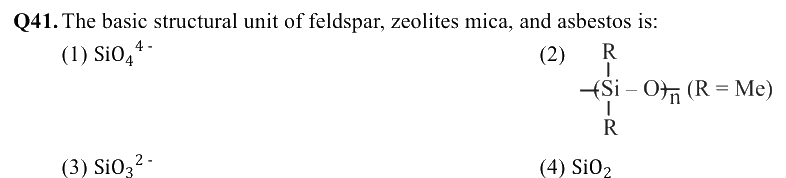
Get EdLoop – freeOpen on the web